Tracks
Get Ready for the German Grand Prix at Sachsenring!
Get set for the German Grand Prix at the Sachsenring, a uniquely challenging circuit dominated by left-hand corners and the fearsome 'Waterfall' downhill turn.
Welcome to the German Grand Prix at the Sachsenring, one of the most unusual and demanding circuits on the entire MotoGP calendar. It might be one of the shortest and slowest tracks we visit all year, but don’t let that fool you. Its tight, twisting layout and a very special characteristic make it a huge test of rider skill, bike setup, and sheer bravery.
For riders, it’s a relentless physical challenge. For engineers, it’s a puzzle. And for fans, it’s a guarantee of watching the world’s best pushed to their absolute limits.
Where is the Sachsenring?
The circuit is located near the town of Hohenstein-Ernstthal in Saxony, a region in eastern Germany with a deep passion for motorcycle racing. Racing has been part of this area’s DNA for nearly a century, originally taking place on closed public roads before the modern, purpose-built track was established.
This history means the local support is incredible. The grandstands create a stadium-like bowl around parts of the track, and the noise from the passionate German fans creates an electric atmosphere all weekend long.
What makes the track so tricky?
The Sachsenring’s defining feature is its anti-clockwise direction and its huge number of left-hand corners. The layout features ten lefts but only three right-hand turns. This is highly unusual and presents a massive technical challenge.
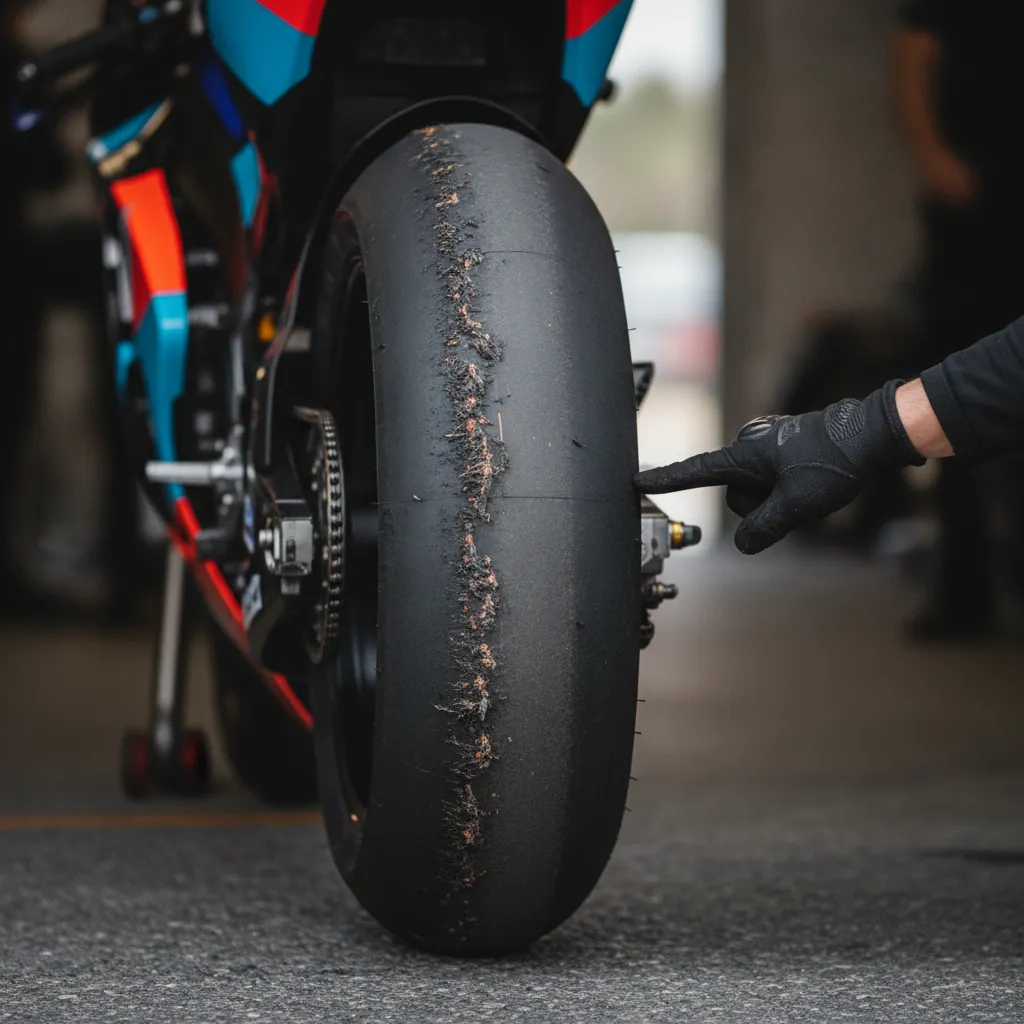
Because the bikes spend so much time leaning to the left, that side of the tyre gets incredibly hot and worn. Meanwhile, the right-hand side of the tyre cools down, sometimes to below its ideal operating temperature. When a rider finally arrives at one of the few right-handers, they have to be extremely careful as the tyre has less grip, making crashes a constant risk.
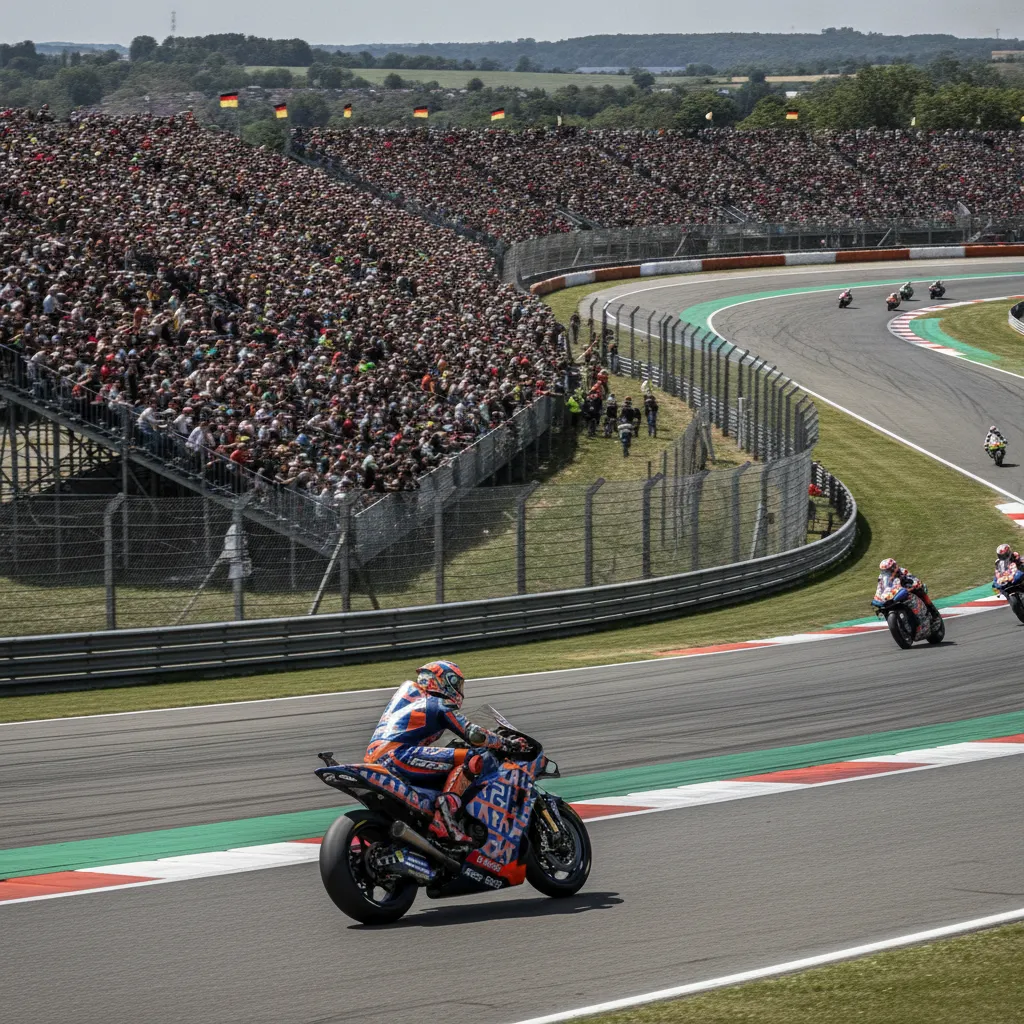
The track is also famous for being quite narrow and undulating, which simply means it has lots of ups and downs. This constantly changing elevation adds another layer of difficulty for the riders to manage.
Which corners should I watch out for?
While the whole lap is a busy one, a few sections stand out. Turn 1 is a fast right-hander at the end of the main straight. It’s a key overtaking spot but also the first test of that cold right-hand side of the tyre.
The middle of the lap features a long, sweeping left-hand corner (Turn 8) known as the Omega curve, which seems to go on forever. Riders need to be incredibly precise here to carry speed through the following sections.
But the most famous corner of all is Turn 11, nicknamed the ‘Waterfall’. It is an incredibly fast, downhill right-hander where the rider can’t see the exit as they turn in — a ‘blind’ corner. The track simply drops away beneath them, and it’s here that the cold right side of the tyre is most severely tested. It requires immense commitment and has been the site of many dramatic moments over the years.
What kind of racing does it produce?
Because the track is so narrow and has so few long straights, raw horsepower is less important here than at other circuits. Instead, the Sachsenring rewards a bike that handles well and a rider who is smooth, precise, and can maintain momentum through the constant corners.
Overtaking is notoriously difficult, which places a huge emphasis on getting a good starting position in QualifyingThe timed sessions that set the starting order, split into Q1 and Q2 for the front rows.Read the full guide →. A rider who gets out in front and can manage a relentless pace can be very difficult to catch. The racing is often a tense, strategic affair rather than a SlipstreamThe pocket of calmer air directly behind another bike. Sitting in it means less wind resistance — so you can carry more speed for free.Read the full guide → battle.
Any tips for a new fan watching at home?
Keep an eye on the riders’ body language, especially as they approach the right-hand corners. You can often see them being a little more cautious, setting the bike up early to avoid asking too much of the cold side of the tyre.
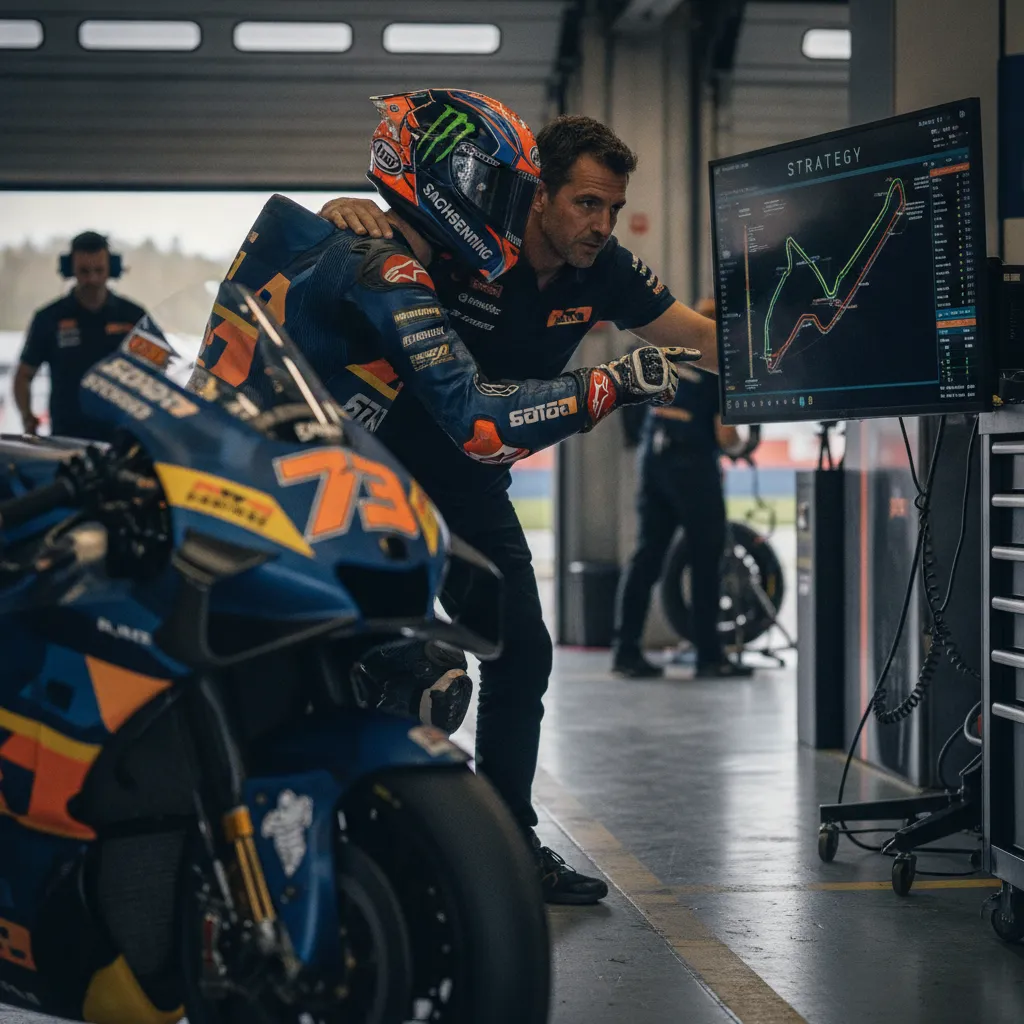
Watching the onboard camera views is a must, especially through the Waterfall at Turn 11. It’s the only way to truly appreciate how steep and fast that section is. Also, listen to the commentary about tyre choices, as the unique layout makes tyre management a central theme of the entire race weekend.
Quick Takeaways
- The Sachsenring is an anti-clockwise circuit dominated by left-hand corners (10 lefts to only 3 rights).
- This imbalance creates a major technical challenge, as the right side of the tyres gets cold and offers less grip.
- The most famous section is Turn 11, the ‘Waterfall’, a terrifyingly fast, blind, downhill right-hander.
- It is a tight, technical track where rider skill and bike agility are more important than pure engine power.
- Overtaking is very difficult, so a good qualifying performance is crucial for a strong race result.
Quick questions
- Q.Why is Sachsenring called a 'left-hand track'?
- It has 10 left-hand corners and only 3 right-handers, making it unique on the calendar and very demanding on the left side of the tyres.
- Q.What is the 'Waterfall' at Sachsenring?
- The Waterfall is the nickname for Turn 11, a very fast, blind, downhill right-hand corner that is one of the most challenging and dangerous in MotoGP.
- Q.Is it easy to overtake at the German Grand Prix?
- No, the track is quite narrow and twisty, which makes overtaking difficult. Races are often won through strategy, consistency, and a good qualifying position.
- Q.How long is the Sachsenring circuit?
- It's one of the shortest tracks on the MotoGP calendar, at approximately 3.7 kilometres (about 2.3 miles) long.