Tracks
India Guide: A Beginner’s View of the Indian GP
New to MotoGP? Our beginner’s guide to the Indian GP covers the Buddh International Circuit’s key corners, long straights, and intense racing conditions.
Independent fan site — not affiliated with MotoGP or MotoGP Sports Entertainment Group (formerly Dorna). Written by AI from official data and fact-checked: how this article was made.
A Brand New Battlefield
Welcome to the Buddh International Circuit, the host of the Indian Grand Prix. MotoGP has raced here once so far, in 2023, when Marco Bezzecchi won, and the Indian GP isn’t on the 2026 calendar. Unlike the historic tracks of Europe, Buddh is a modern giant, and a formidable challenge. It’s a circuit of contrasts, demanding both brute force and delicate precision from the world’s best riders.
What makes it so special for a newcomer to watch? It’s a track that visually lays out the core challenge of MotoGP: the constant battle between raw speed on massive straights and pinpoint accuracy through tight, technical corners. It’s a spectacular place to see just how versatile these incredible machines and their riders truly are.
Location and Atmosphere: Grand Scale and Searing Heat
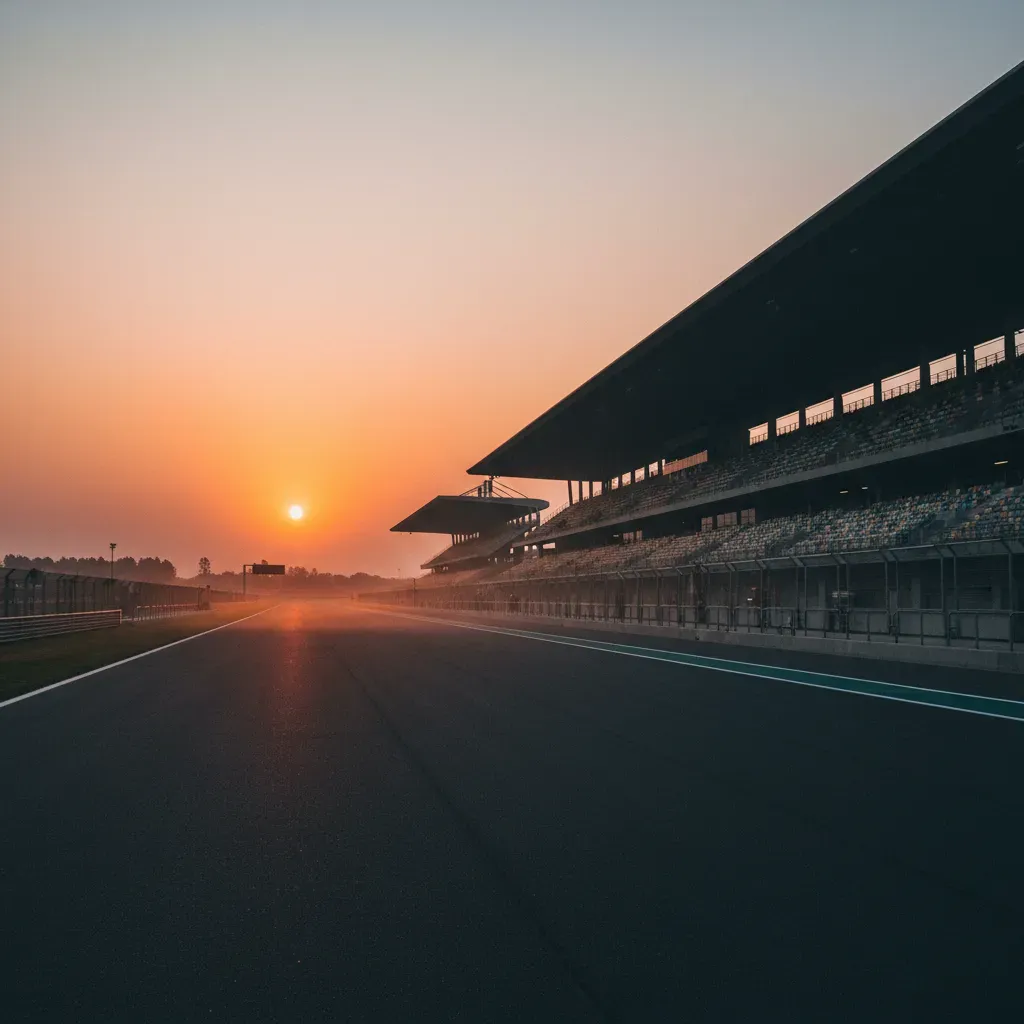
Located near New Delhi, the Buddh International Circuit is enormous. The sheer scale of the grandstands and facilities can be breathtaking, designed from the ground up for major international motorsport. It feels vast and important, a true modern amphitheatre for racing.
The defining characteristic of the race weekend, however, is the environment itself. The intense heat and high humidity are relentless, pushing both riders and machinery to their absolute limits. Keeping cool is a serious challenge, and the physical toll on the riders over a 40-minute race is immense.
The Circuit: A Tale of Two Halves
The track layout, designed by the famous circuit architect Hermann Tilke, is best understood as a track of two distinct personalities. The first half is dominated by long, flowing straights and fast corners where bikes can unleash their incredible horsepower. The second half, however, transforms into a twisting, technical sequence that demands agility and rhythm.
This split personality forces teams into a difficult compromise. Do they set up the bike for maximum straight-line speed, knowing it will be harder to turn in the tight sections? Or do they focus on nimble handling, sacrificing precious kilometres per hour on the straights? This strategic gamble is fascinating to watch unfold.
The Need for Speed: The Back Straight
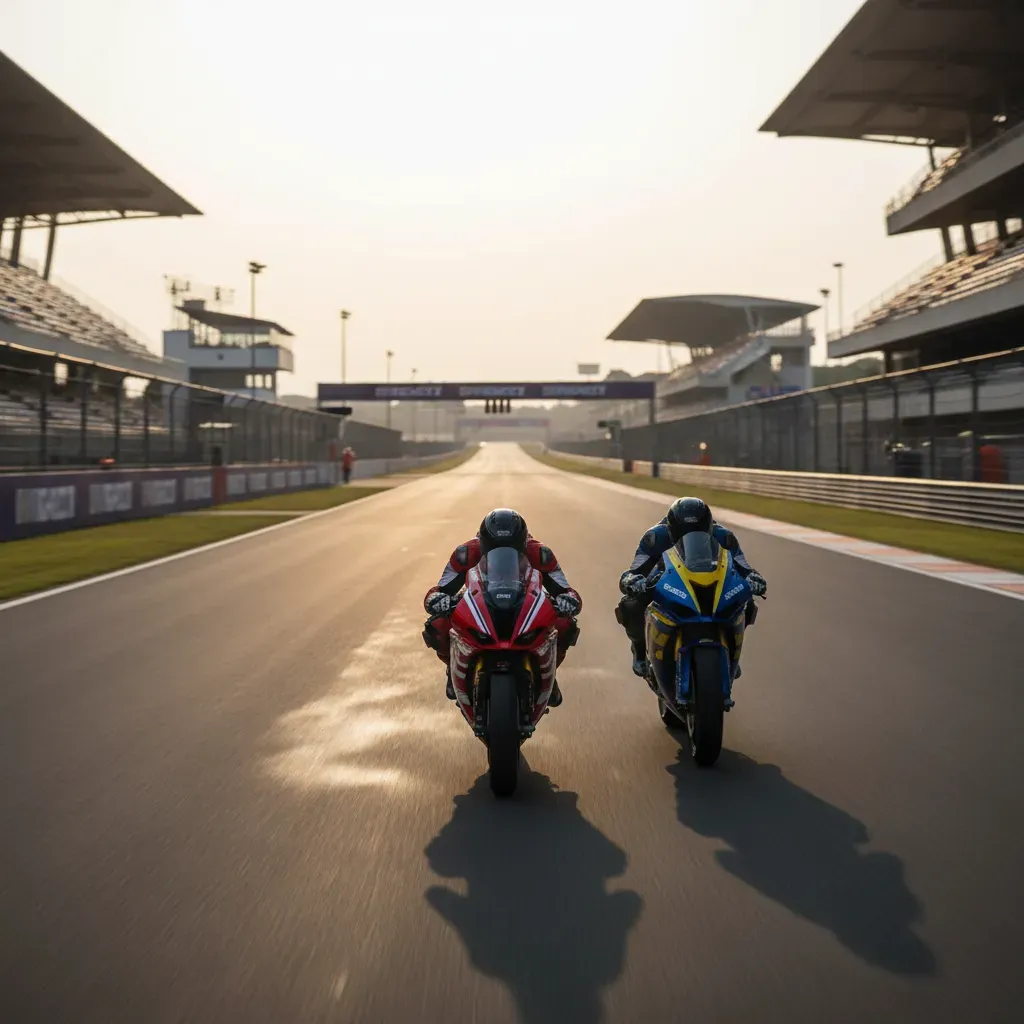
The most talked-about feature of the Buddh circuit is its colossal back straight. Stretching for over 1.2 kilometres, it is one of the longest in the entire MotoGP championship. Here, the bikes reach some of their highest speeds of the season, a truly staggering display of power.
This is where you’ll see a clever tactic called SlipstreamThe pocket of calmer air directly behind another bike. Sitting in it means less wind resistance — so you can carry more speed for free.Read the full guide → (also known as drafting). This is where a rider tucks in right behind another bike to cut through the air resistance, getting a ‘tow’ that provides a burst of extra speed. Watch for riders using this to line up a dramatic overtake into the heavy braking zone at Turn 4.
The Banked Sweeper: Turns 10 and 11
If the straight is about power, this section is all about finesse. Turns 10 and 11 form one long, continuous right-hander, and what makes it so special is that it’s both banked and has more than one ApexThe innermost point of a corner — the tightest part of the turn that a rider aims to clip to carry the most speed onto the next straight.Read the full guide →.
A banked corner means the track surface is tilted inwards, a bit like a cycling velodrome, which allows riders to carry more speed through the turn. A multi-apex corner means there isn’t just one single point to aim for; riders have to hit several perfect points to get the ideal line through the long, sweeping bend. It’s a beautiful, flowing piece of track that looks incredible on television.
The Surprise Climb: Turn 3
One of the track’s hidden challenges is its elevation change. Nowhere is this more apparent than the approach to Turn 3. As riders exit Turns 1 and 2, the track climbs steeply into the corner.
The climb means riders can’t see far ahead as they turn in. They have to rely on instinct, memory, and track markers to position the bike perfectly, all while braking hard from high speed. It’s a small detail that adds a huge amount of difficulty.
What to Expect on Race Day
The Indian GP is a race of strategy. The long straights favour bikes with the most powerful engines, but those bikes can sometimes struggle in the twisty final section. Expect to see exciting battles between bikes with different strengths, especially in the final laps.
The biggest factor, however, will be the tyres. The hot track surface causes the rubber tyres to wear out very quickly. Riders who are too aggressive early in the race will find themselves with very little grip left at the end. The winner will be the rider who is not only fast but also smart enough to manage their tyres to the finish.
Tips for Watching Your First Indian GP
As a new fan, focus on a few key areas to get the most out of the race. Firstly, watch the slipstreaming battles on the long back straight; the onboard cameras will give you a thrilling sense of the speed. Secondly, pay attention to the different lines riders take through the banked Turn 10-11 sweeper—some will go in tight, others will take a wider, sweeping line.
Finally, the start is always chaotic and exciting. Watching 22 bikes thunder into the tight Turn 1 is one of the great spectacles in motorsport. It’s a great way to understand the bravery and skill required from the very first second of the race.
Quick Takeaways
- Buddh International Circuit is a modern track defined by its contrast between ultra-long straights and a tight, technical infield section.
- The 1.2-kilometre back straight is a hotspot for slipstreaming, where bikes reach incredible Top speedThe fastest a bike goes on a lap, reached at the end of the longest straight — over 360 km/h at the quickest circuits.Read the full guide → before a heavy braking zone.
- The most unique feature is the banked, multi-apex Turns 10 and 11, a long, flowing corner that challenges rider skill.
- Extreme heat and humidity make this one of the most physically demanding races for the riders and puts a huge strain on tyre life.