Tracks
Le Mans Track Guide: A First Look at the French GP
Our beginner’s guide to the French GP at Le Mans. Discover the passionate crowds, the stop-go circuit, and the key corners that make this race a classic.
Independent fan site — not affiliated with MotoGP or MotoGP Sports Entertainment Group (formerly Dorna). Written by AI from official data and fact-checked: how this article was made.
French Grand Prix
Circuit Bugatti, Le Mans
The permanent 'Bugatti' loop inside the famous 24-hour circuit — a stop-start rhythm of hard braking and tight chicanes in front of one of the biggest, most passionate crowds of the year.
Schematic layout · not to scale
Watch the Dunlop chicane. A hard left-right flick where riders are constantly diving up the inside and running wide — it produces contact, comebacks and chaos almost every year. Follow that corner.
Welcome to the French Grand Prix
Welcome to Le Mans, home of the French Grand Prix. It’s a circuit famous for two things: an absolutely incredible, roaring crowd and a layout that demands brutal braking followed by explosive acceleration.
This track isn’t about graceful, flowing speed; it’s a stop-start rollercoaster that pushes bikes and riders to their limits. Get ready for one of the most exciting and atmospheric races on the calendar.
The Heartbeat of French Motorcycle Racing
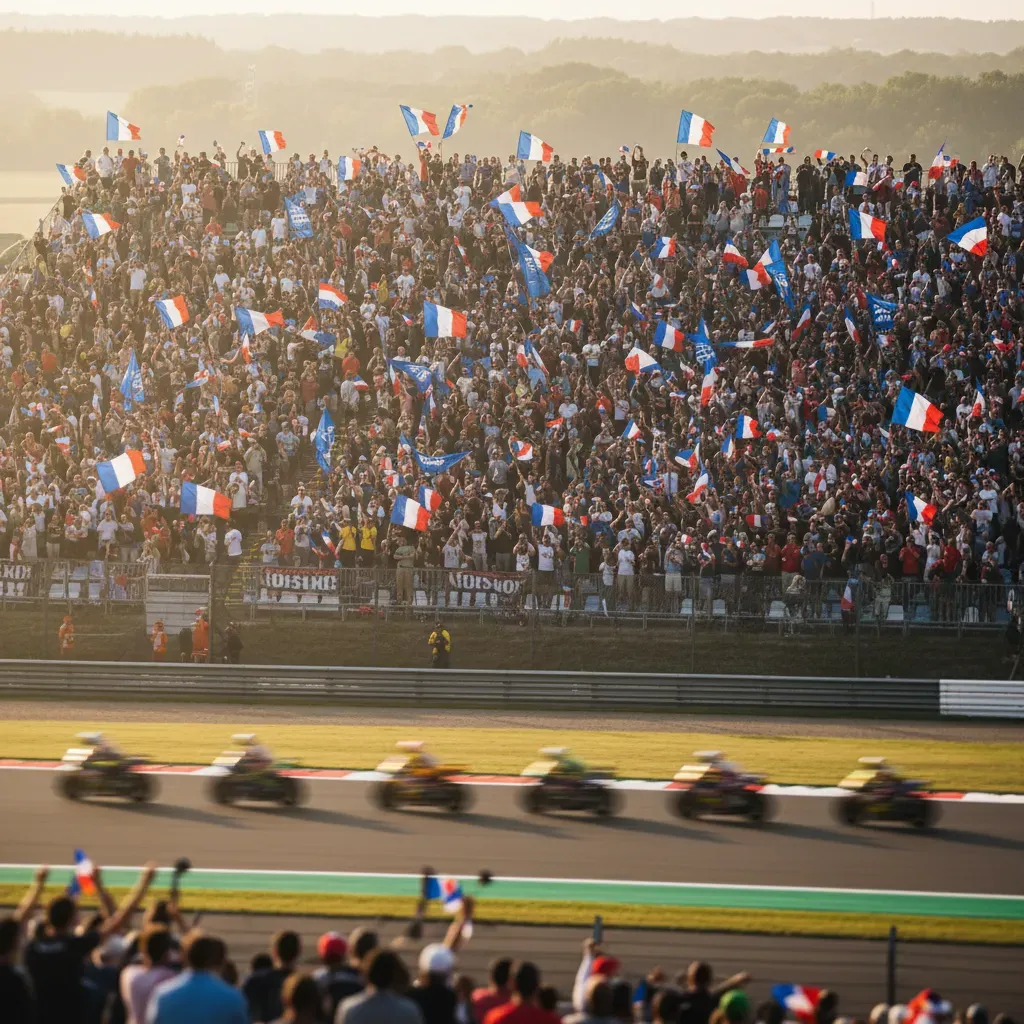
Located in the historic city of Le Mans in north-western France, this circuit is legendary. The atmosphere is truly electric, fuelled by tens of thousands of passionate fans who create a wall of sound, especially for their home heroes like Fabio Quartararo and Johann Zarco.
When a French rider is on track, the noise from the grandstands is something special. Flares, flags, and air horns create a festival-like party that lasts all weekend long, making it a favourite event for riders and fans alike.
Understanding the Bugatti Circuit
You might have heard of the famous “24 Hours of Le Mans” car race. While MotoGP races in the same iconic location, it uses a much shorter, custom-built layout called the Bugatti Circuit.
This track is what’s known as a “stop-and-go” circuit. It’s not about long, sweeping corners but a series of slow turns linked by short straights. This places a huge emphasis on a bike’s ability to brake incredibly late and accelerate incredibly hard out of corners.
Key Corners to Watch
The Dunlop Chicane (Turns 3 & 4)
After the start, riders charge uphill towards the iconic Dunlop Bridge. Just before they pass underneath it, they have to slam on the brakes for the Dunlop ChicaneA quick sequence of tight, alternating corners (left-right or right-left), often built to slow the bikes down.Read the full guide →, a tight left-then-right sequence of corners designed to slow them down.
A chicane is simply a sharp, artificial corner combination added to a straight to reduce speed. This one is a major hotspot for overtakes and first-lap drama as everyone tries to squeeze through the narrow entry at the same time.
La Chapelle (Turn 6)
This corner is a long, demanding right-hander that seems to go on forever. It has what’s called a “double ApexThe innermost point of a corner — the tightest part of the turn that a rider aims to clip to carry the most speed onto the next straight.Read the full guide →,” meaning there are two key points on the inside of the corner that riders aim to hit to carry the most speed through it.
Getting La Chapelle right requires immense precision and patience. Go too fast, too early, and you’ll run wide on the exit; go too slow and you lose precious time. It’s a real test of a rider’s skill.
The Raccordement Section
This is the final test before the main straight. It’s a slow, tight section that feeds directly onto the start-finish straight, and it’s where many French GPs have been won and lost.
A good exit here is vital for setting up a last-lap overtake down the straight. A small mistake can leave a rider vulnerable to attack from behind, making it a thrilling part of the track to watch in the final moments of a race.
What Makes a Winning Bike at Le Mans?
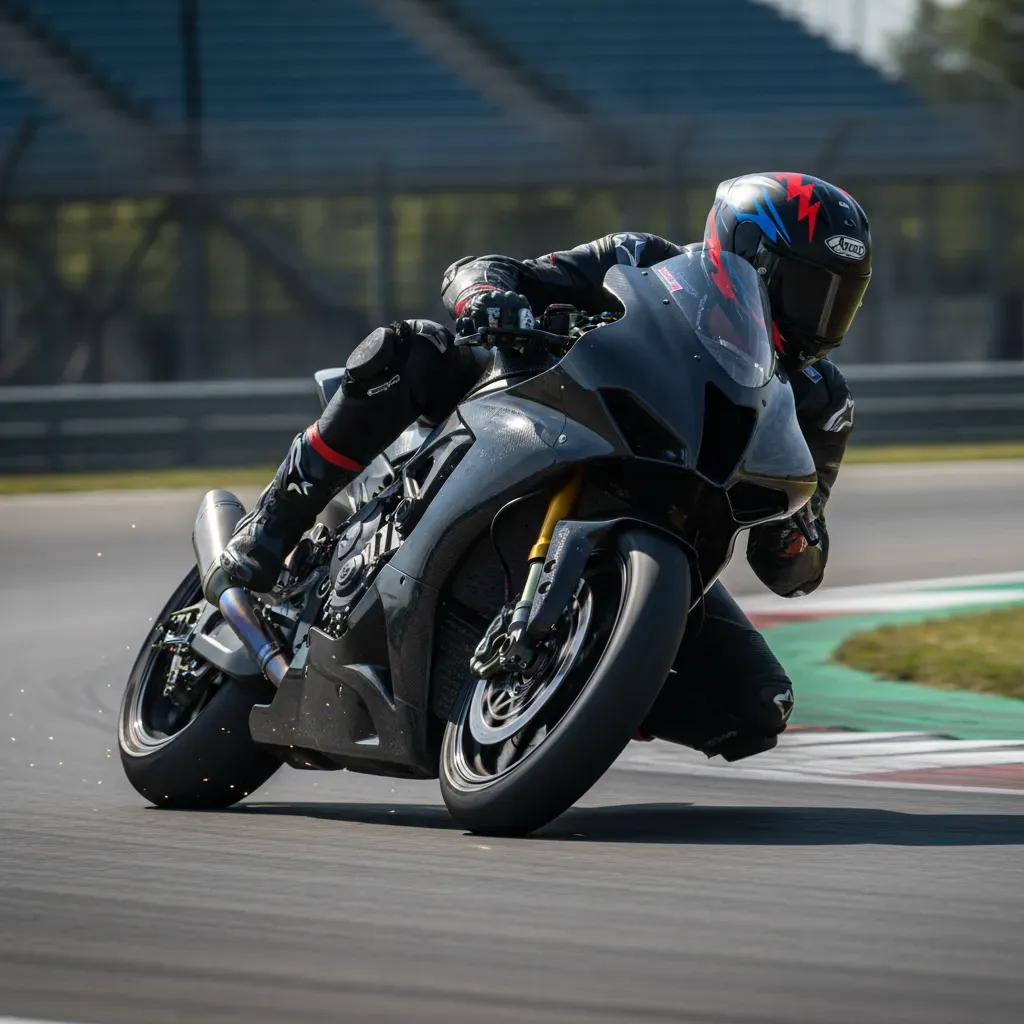
Because of the stop-start nature of the track, a bike doesn’t need the highest Top speedThe fastest a bike goes on a lap, reached at the end of the longest straight — over 360 km/h at the quickest circuits.Read the full guide → to win here. Instead, it needs two things above all else: incredible braking stability and fantastic acceleration.
Riders need to trust their brakes completely to dive into the slow corners later than their rivals. Then, they need a bike that can fire out of those same corners like a cannonball to get a good drive down the next short straight.
Race Day Behaviour: Overtakes and Rain Clouds
Le Mans is a fantastic track for action. The heavy braking zones into the chicanes provide plenty of opportunities for brave overtaking manoeuvres, so you’re almost guaranteed to see riders swapping positions throughout the race.
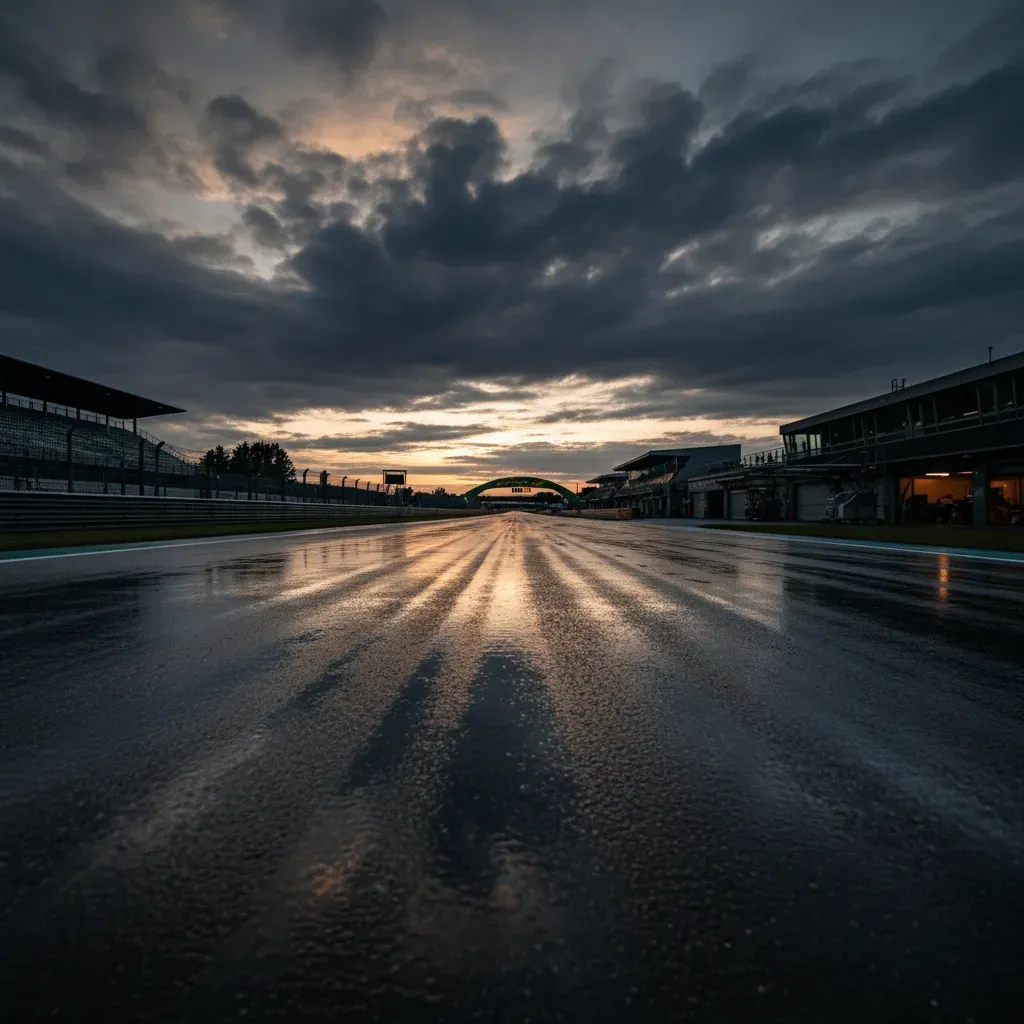
However, the circuit has a notorious reputation for unpredictable weather. A race can start in bright sunshine and end in a torrential downpour, forcing riders to pit and swap to their spare bikes fitted with wet-weather tyres. This chaos often shuffles the order and leads to surprise results.
A Beginner’s Viewing Guide
If you’re ever lucky enough to visit, one of the best places to watch is from the grandstands and grass banks around the Dunlop Chicane.
From here, you get a fantastic view of the bikes roaring up the hill, braking on the absolute limit, and fighting for position through the tight corners. It’s a brilliant spot to soak in the incredible atmosphere and witness the bikes’ awesome power up close.
Quick Takeaways
- Le Mans is a “stop-and-go” circuit, favouring bikes with strong brakes and powerful acceleration over outright top speed.
- The atmosphere is one of the best of the year, driven by a huge, passionate French crowd cheering on their home riders.
- Key action spots include the Dunlop Chicane after the start and the final Raccordement section, which are prime overtaking zones.
- The weather is famously unpredictable and can turn a race on its head in an instant, often leading to dramatic and chaotic races.