Tracks
Motegi Guide: A Beginner’s View of the Japanese GP
Discover MotoGP’s Japanese GP at Motegi. Our beginner’s guide explains the stop-and-go track, its key corners, and why it’s a home race for Honda.
Independent fan site — not affiliated with MotoGP or MotoGP Sports Entertainment Group (formerly Dorna). Written by AI from official data and fact-checked: how this article was made.
Japanese Grand Prix
Mobility Resort Motegi
The ultimate stop-and-go circuit, owned by Honda — a lap built almost entirely from long straights slamming into tight hairpins, brutally hard on brakes and a real test of a bike's stopping power.
Schematic layout · not to scale
Watch any of the heavy braking zones. Motegi is a chain of straights into hairpins, so the bikes are constantly on the very edge of the front brake — lock-ups and last-gasp lunges are everywhere. Follow the braking into Turn 11, the 90-degree corner at the bottom of the long downhill straight — the hardest stop of the lap.
Welcome to Motegi: The Heart of Japanese Motorcycle Racing
Imagine a place built by one of motorsport’s giants, not just as a racetrack, but as a testament to its own history and ambition. That place is Mobility Resort Motegi, the home of the Japanese MotoGP Grand Prix. It’s more than just a circuit; it’s a pilgrimage site for fans of Honda, Yamaha, and Suzuki.
Nestled in the hills of the Tochigi prefecture, Motegi is unique. The atmosphere is one of profound respect and passion. Fans are incredibly knowledgeable and polite, creating a wonderfully welcoming environment for newcomers. This is the home race for the titans of Japanese engineering, and you can feel that heritage in the air.
The Track: A ‘Stop-and-Go’ Challenge
If some tracks flow like a river, Motegi is a series of powerful, deliberate steps. It’s known as a ‘stop-and-go’ circuit, which means it’s dominated by long, fast straights that slam into tight, slow corners. Riders go from maximum speed to first gear in the blink of an eye, over and over again.
This layout places huge demands on two things: a bike’s brakes and its ability to accelerate. A rider needs immense confidence to brake as late as possible, and a powerful engine to rocket out of the slow turns. It’s a physical and mechanical test unlike almost any other on the calendar.
Key Corners to Watch
While the whole track is a challenge, a few key sections define the race. When you’re watching, pay close attention to the action in these spots.
Turn 1: The First Big Stop
At the end of the start-finish straight, riders brake hard for the right-hander at Turn 1. It’s the first of many big stops on the lap, and with the whole pack arriving together on the opening lap, it’s a recipe for mistakes.
Watch for riders getting their braking point just right. Getting it wrong means running wide and losing precious time, or worse, crashing. It’s a subtle but crucial corner that sorts the brave from the brilliant.
Turn 11: The Famous ’90-Degree Corner’
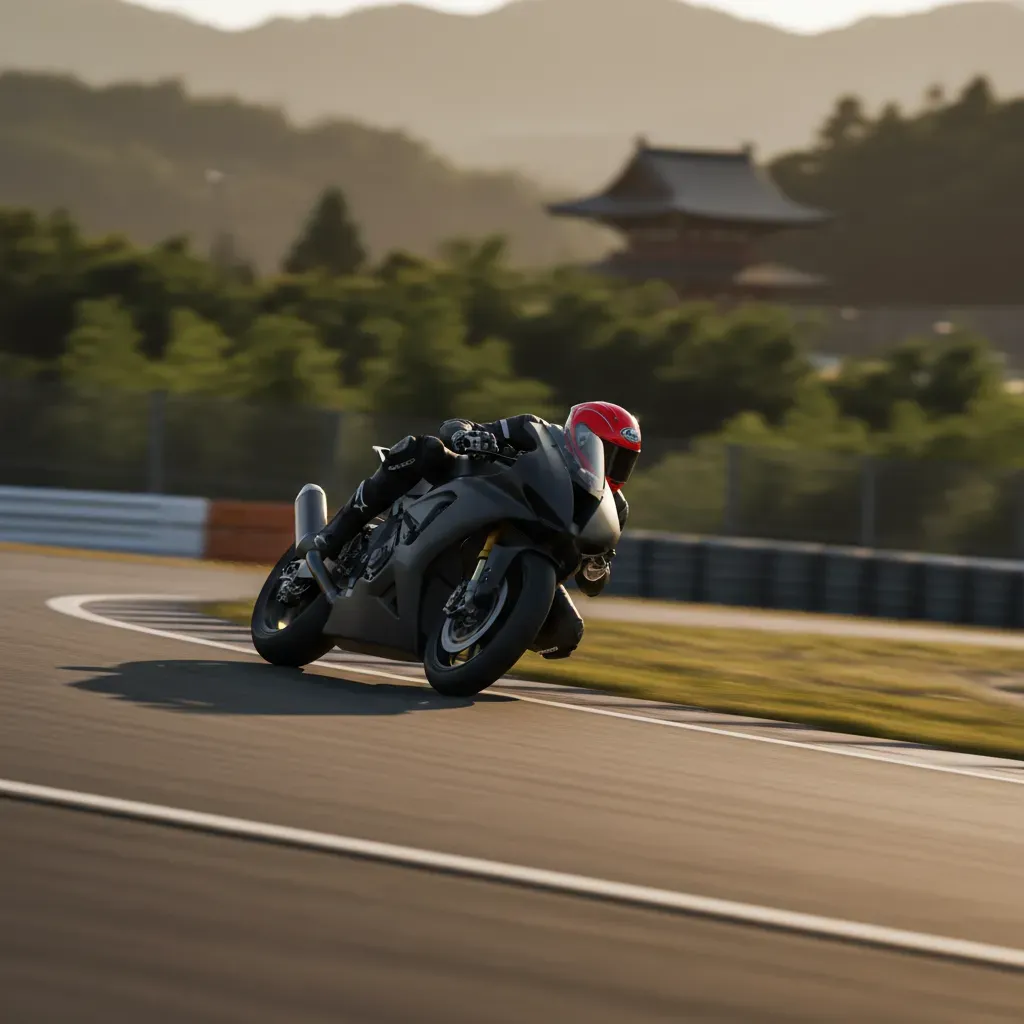
This is arguably Motegi’s most famous corner and a prime spot for overtaking. It comes at the end of the circuit’s longest straight, a 760-metre downhill blast that drops about 30 metres, and riders then brake from over 300 km/h for the sharp, 90-degree turn. Brembo rates it the toughest braking point on the circuit.
Riders have to slow their 300-horsepower machines from Top speedThe fastest a bike goes on a lap, reached at the end of the longest straight — over 360 km/h at the quickest circuits.Read the full guide → down to about 50 mph in just a few seconds. This is a classic ‘out-braking’ spot, where a rider can dive up the inside of a rival. It requires perfect timing and immense bravery.
The ‘Victory’ Corner
The final corner at many tracks is a single turn, but Motegi has a tight ChicaneA quick sequence of tight, alternating corners (left-right or right-left), often built to slow the bikes down.Read the full guide → (a sequence of tight, alternating turns) that leads onto the finish straight. This complex is often called the ‘Victory’ corner because so many last-lap battles are decided here.
A rider leading into this section has to defend their position perfectly. A small mistake allows the rider behind to get a better drive onto the straight and snatch victory right at the finish line. It’s a nail-biting end to a lap.
How Races Unfold at Motegi
The ‘stop-and-go’ nature of the track creates a specific kind of race. The brakes on a MotoGP bike are made of carbon fibre and glow red-hot under the strain, reaching temperatures of over 800 degrees Celsius. Keeping them working effectively for the whole race is a huge challenge for the teams.
Because acceleration is so important, bikes with powerful engines tend to do well here. A bike that can launch out of the slow corners and onto the straights has a massive advantage. This is why Motegi is seen as a key test for manufacturers trying to improve their engine performance.
Overtaking is frequent and exciting, happening almost exclusively in the heavy braking zones. A rider who is confident on the brakes can make up a lot of ground. It’s a circuit that rewards aggressive, precise riding.
A Beginner’s Viewing Guide
When you tune in, here are a few things to look for. Watch the front of the bikes as they brake for the slow corners – you’ll see the front forks compress dramatically under the huge forces. Also, listen to the engines; you’ll hear them scream at high revs on the straights before the sound changes completely as riders use ‘engine braking’ (slowing the bike by shifting down through the gears) to help them stop.
Keep an eye out for local hero Ai Ogura, who stepped up to MotoGP in 2025. The support he receives from the home crowd is incredible and adds another layer of emotion to the weekend. And for a fun fact, the circuit is owned by Honda and is home to the Honda Collection Hall, a world-famous museum full of legendary cars and motorcycles.
Motegi is a track of contrasts: extreme speed and sudden stops, high technology and deep heritage. It’s a fantastic spectacle and a perfect showcase for what makes MotoGP so thrilling.
Quick Takeaways
- Motegi is a ‘stop-and-go’ circuit, defined by long straights followed by very slow, tight corners.
- It is incredibly demanding on brakes, which glow red-hot from the intense, repeated use.
- The track is the ‘home race’ for Japanese manufacturers like Honda and Yamaha, adding extra pressure and prestige.
- Key overtaking spots are the heavy braking zones, especially into the ’90-Degree Corner’ at Turn 11.
- The atmosphere is famous for its respectful, passionate, and knowledgeable Japanese fans.