Beginner Guides
MotoGP Bikes vs Road Bikes: What’s the Difference?
Ever wondered why you can’t buy a MotoGP bike? Discover the key differences in materials, power, and tech that separate these elite prototypes from road bikes.
Independent fan site — not affiliated with MotoGP or MotoGP Sports Entertainment Group (formerly Dorna). Written by AI from official data and fact-checked: how this article was made.
Why You Can’t Buy a MotoGP Bike
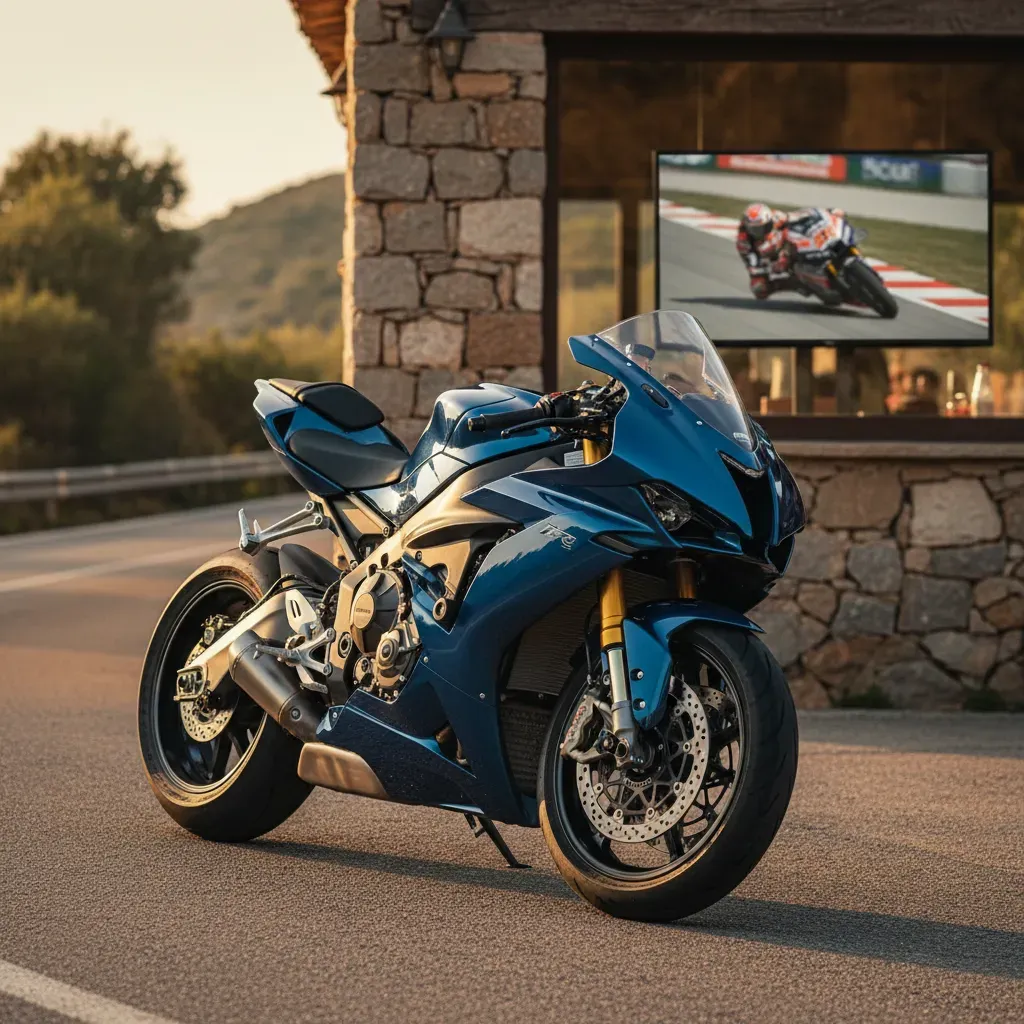
You’ve just watched an incredible race, seen your favourite rider lean at an impossible angle, and thought, ‘I want one of those!’ It’s a common dream, but unfortunately, the machines you see in MotoGP are a world away from the bikes you can buy in a showroom.
The simple reason is that a MotoGP bike is a prototype. This means it’s a one-of-a-kind machine, designed and built from scratch for the single purpose of winning races at the highest level. It’s not a modified road bike; it’s a pure-bred racing weapon.
Built for Victory, Not the Commute
Think of Francesco Bagnaia’s Ducati. That motorcycle was engineered with zero compromises. Every single component is chosen for maximum performance, not for comfort, reliability over thousands of miles, or affordability.
A road bike, even a very fast one, is a compromise. It needs to start every morning, be comfortable enough to ride for more than an hour, have lights and mirrors to be legal, and last for years with regular servicing. A MotoGP bike only needs to last for a race weekend, and cost is no object.
The Heart of the Beast: The Engine
A top-spec road superbike might have around 200 horsepower, which is an incredible amount of power. A MotoGP bike, however, produces well over 280 horsepower, with some estimates pushing 300. This power comes from an engine designed with materials and technology borrowed from aerospace and Formula 1.
These engines are handmade and exist only for racing. For example, Yamaha is developing a brand new V4 engine specifically for its 2026 campaign. Teams are constantly pushing the boundaries of engineering, creating engines that are powerful but also incredibly fragile and expensive to maintain.
Weight and Materials: Light as a Feather
One of the biggest differences is weight. A MotoGP bike is shockingly light, weighing around 157kg, which is the minimum weight allowed by the rules. This is lighter than many small-capacity bikes you can buy for the road.
This incredible lightness is achieved by using exotic and expensive materials. The bodywork is made from carbon fibre, and on many bikes so is the SwingarmThe pivoting arm that connects the rear wheel to the bike and lets the suspension move.Read the full guide → (the part that holds the back wheel), while the frames are hand-built from materials such as aluminium. Carbon fibre is fantastically strong and incredibly light, but it’s also very expensive compared to the aluminium and steel used on most road bikes.
Stopping Power: Carbon Brakes
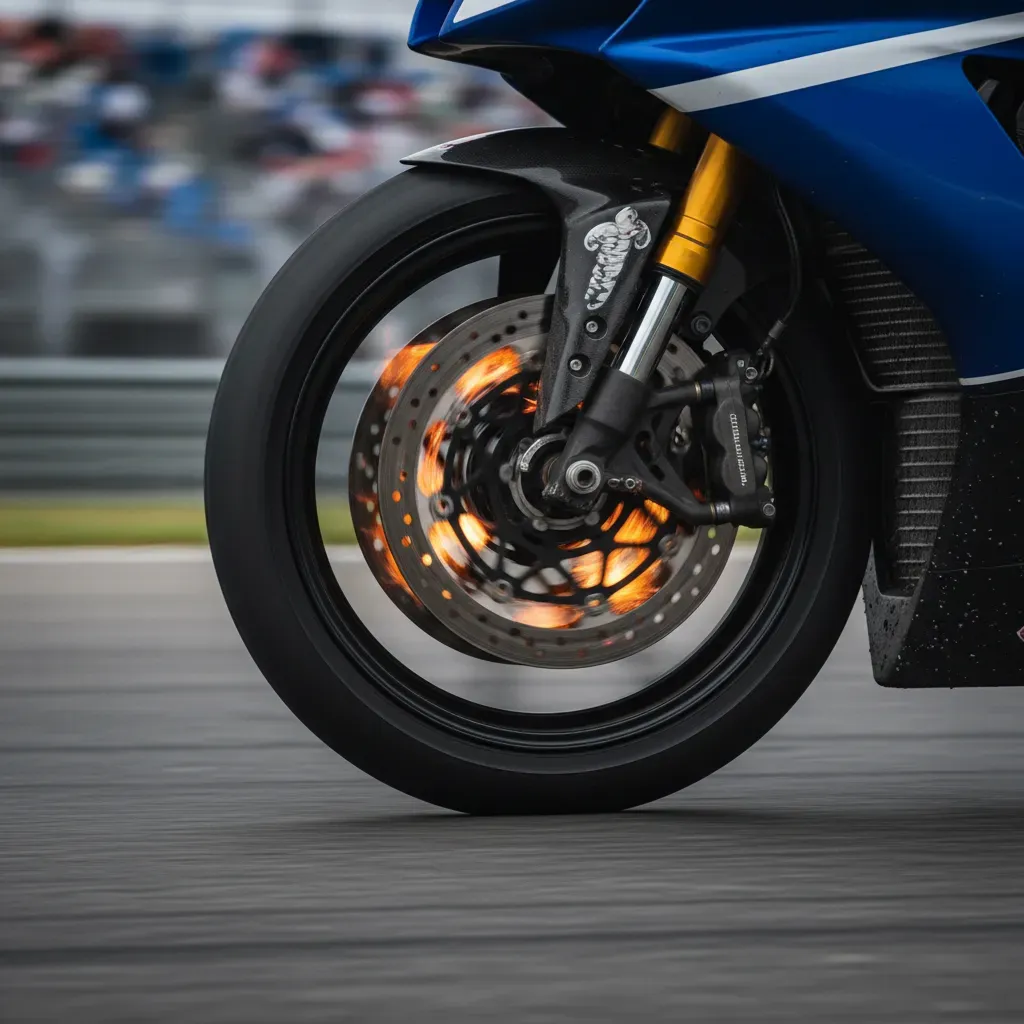
Getting a 300-horsepower machine to slow down from over 220 mph requires some serious stopping power. MotoGP bikes don’t use the steel brake discs found on your road bike; they use Carbon brakesBrake discs and pads made of carbon — lighter and more powerful than steel, but they only work properly when very hot, roughly 200 to 800°C.Read the full guide →. These are discs made from a carbon-carbon composite material.
Carbon brakes have a superpower: the hotter they get, the better they work. At racing temperatures, they can stop the bike with immense force. However, they have a major drawback that makes them useless for the road: they work poorly until they’re hot. That’s no good for the first roundabout on a chilly morning!
Electronics: The Unseen Genius
Modern MotoGP bikes are packed with sophisticated electronics that are far more advanced than anything on a road bike. The bike’s ‘brain’ is called the ECU (Engine Control Unit), and it manages everything from how much fuel is injected to stopping the bike from flipping over.
These systems, like traction control (which stops the rear wheel from spinning) and anti-wheelie control, are customised for every single corner of every track. They are designed to help the rider go as fast as humanly possible. While road bikes have similar systems, they are designed primarily for safety in unpredictable conditions, not for shaving milliseconds off a lap time.
Tyres: Sticky for a Short Time
The tyres on a MotoGP bike are perhaps the most specialised component of all. They are designed to provide mind-boggling levels of grip, allowing those famous, elbow-down Lean angleHow far the bike is tipped from vertical through a corner — MotoGP riders pass 60°.Read the full guide →. They are incredibly soft and sticky, getting up to temperature very quickly.
The trade-off is that they last for a very short time – sometimes not even a full race distance. They are completely unsuitable for the road, where you need a tyre that can handle different surfaces, work in the rain, and last for thousands of miles, not just 25 laps.
A Different Species
So, while a top-end superbike you can buy might look a bit like a MotoGP machine, they are truly different species. A road bike is an amazing piece of engineering designed for the real world. A MotoGP bike is a priceless, hand-built projectile designed to operate at the absolute limit, and nothing else.
It’s a pure expression of speed, a collection of the most advanced technology on two wheels, built to be ridden by the best riders on the planet. And that’s what makes watching them so special.
Quick Takeaways
- MotoGP bikes are ‘prototypes’, meaning they are one-off machines built purely for racing and not for sale.
- They use exotic materials like carbon fibre to be incredibly light (around 157kg) while producing immense power (over 280hp).
- Key components like carbon brakes and specialist tyres are designed for extreme performance on a track and are completely unsuitable for public roads.
- The electronics are far more advanced, tuned specifically for lap times, unlike the safety-focused systems on road bikes.