Beginner Guides
MotoGP Crashes & Rider Safety: How Do They Walk Away?
Ever wonder how MotoGP riders walk away from those huge crashes? We explain the incredible tech in their gear and the skills they use to stay safe.
Independent fan site — not affiliated with MotoGP or MotoGP Sports Entertainment Group (formerly Dorna). Written by AI from official data and fact-checked: how this article was made.
How on Earth Do They Survive That?
You’re new to MotoGP and you’ve just seen it: a rider, leaning at an impossible angle, suddenly loses control. The bike and rider separate, tumbling across the track at over 150 miles per hour. Yet, moments later, you see the rider get up and walk away. How is this possible?
It’s a question every new fan asks. The answer isn’t just luck. It’s a carefully organised combination of incredible rider skill, mind-boggling technology built into their gear, and intelligent track design. Let’s break down how they walk away from the seemingly impossible.
The Rider’s Role: The Art of Crashing
It might sound strange, but MotoGP riders are experts at crashing. When you spend your life pushing a machine to its absolute limit, you learn that falling off is part of the job. Their skill isn’t just in avoiding crashes, but in managing them when they become inevitable.
The ‘Good’ Crash: The Lowside
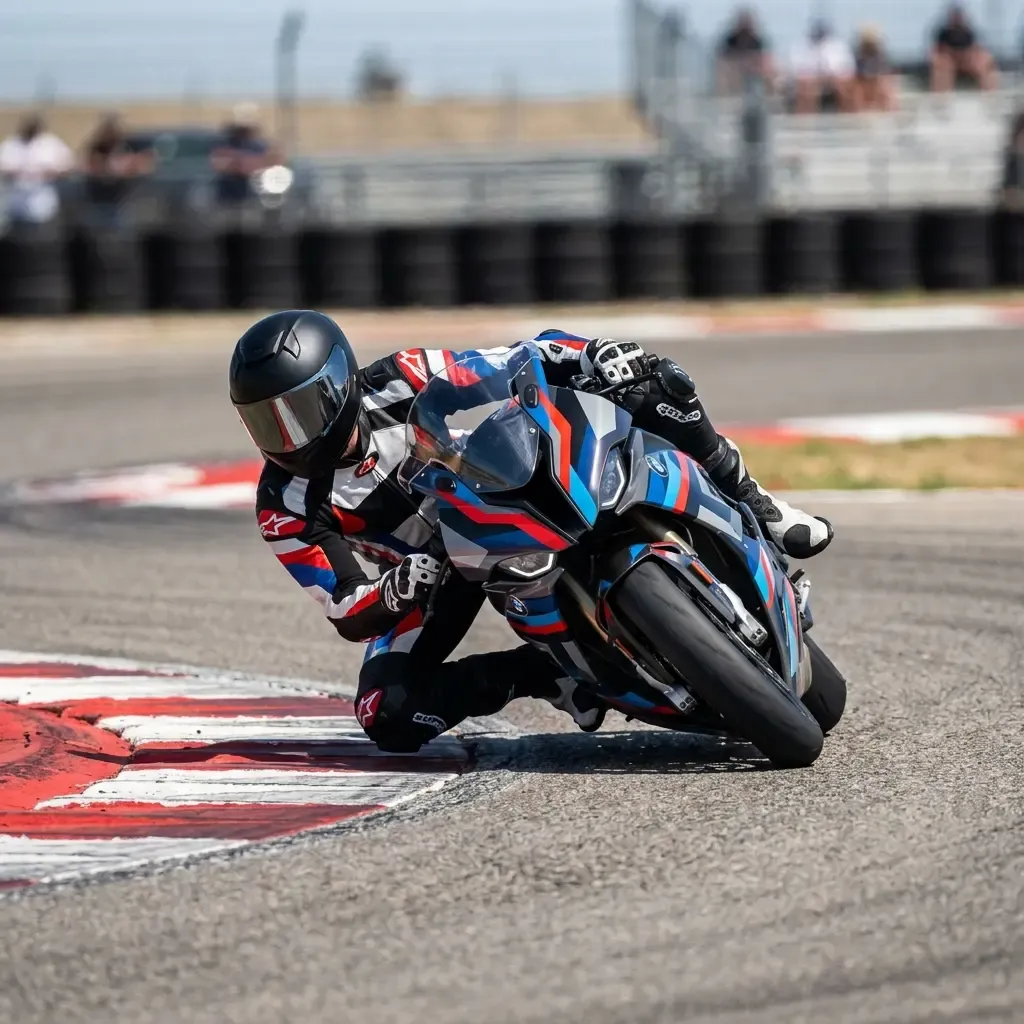
There are two main types of crash, and riders have a definite favourite. The most common is called a lowside. This happens when a bike’s tyres lose grip, usually at the front or rear, and the bike simply slides out from underneath the rider. The rider essentially falls to the ‘low side’ of the bike.
While it looks dramatic, a lowside is predictable. The rider and bike slide along the tarmac, scrubbing off speed. The rider’s main job here is to get their limbs in, relax, and become a human toboggan, letting their safety gear do all the work. It’s all about sliding to a stop.
The ‘Bad’ Crash: The Highside
The one they all fear is the highside. This is a violent, unpredictable crash that occurs when the rear tyre loses grip, starts to spin, and then suddenly regains traction. This sudden grip acts like a catapult, viciously flinging the rider up into the air, over the ‘high side’ of the bike.
The danger here is the fall from a great height, with the rider often landing heavily and awkwardly. There’s no controlled slide; it’s a chaotic tumble. This is where the most serious injuries tend to happen, which is why riders will do anything to avoid one.
A Suit of High-Tech Armour
A rider’s gear is so much more than just clothing. It’s a personal survival cell, engineered to withstand massive forces. Every single piece, from head to toe, is the result of decades of research and development.
The Second Skin: Leathers
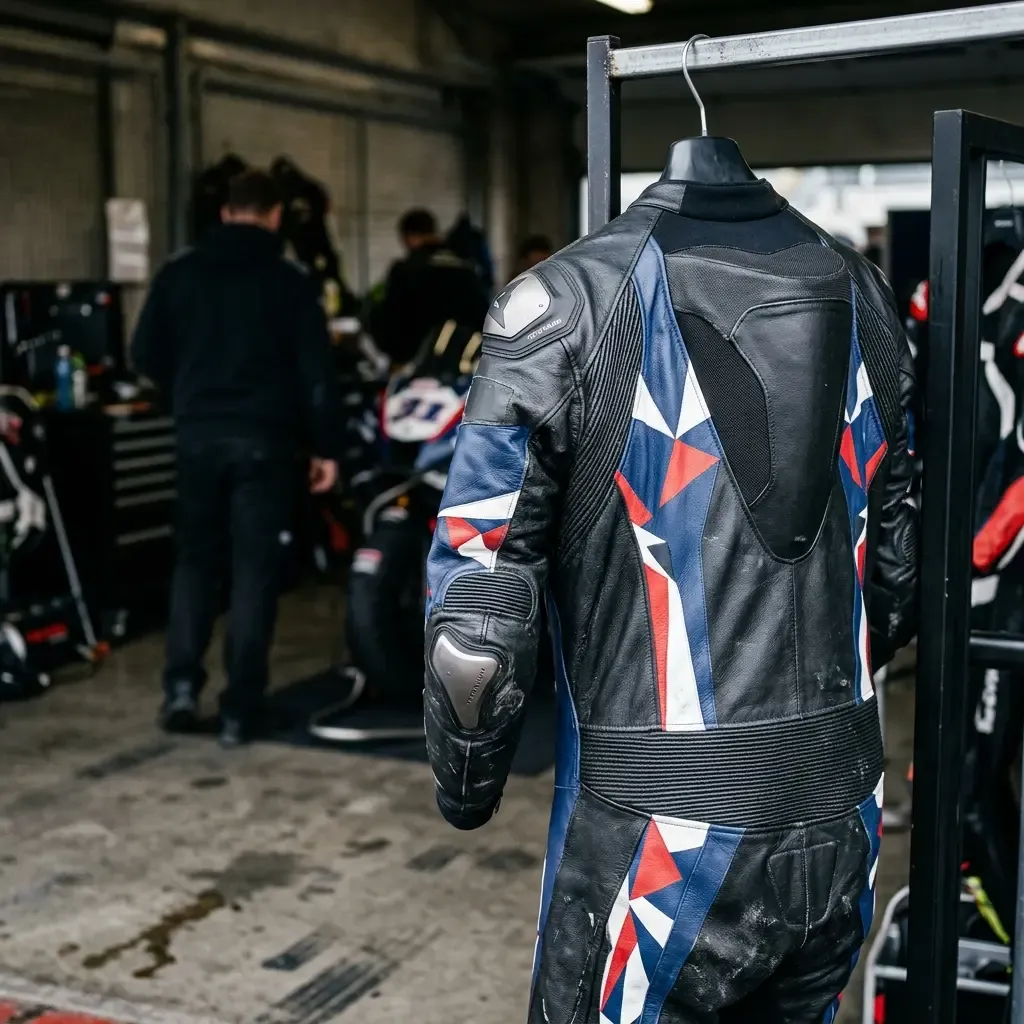
The one-piece suit a rider wears is universally known as their leathers. They are custom-fitted to each rider’s body and are typically made from extremely tough but flexible kangaroo hide. Their primary job is abrasion resistance – preventing a rider’s skin from being scraped away when sliding across the track.
But they do more than just slide. Integrated into the suit is CE-rated body armour, which are hard protective plates located at the shoulders, elbows, hips, and knees. These help to absorb and spread the force of a direct impact.
The Secret Weapon: The Airbag System
This is the single biggest safety innovation in modern racing. Tucked invisibly inside the leathers is a sophisticated airbag system. It’s a marvel of miniature technology, composed of tiny sensors like gyroscopes and accelerometers that constantly monitor the rider’s movements.
These sensors are running complex algorithms that can tell the difference between normal racing behaviour and the unique signature of a crash. When the system detects that the rider has been thrown from the bike – a highside, for example – it triggers a small gas canister.
In less than 25 milliseconds (faster than you can blink), the airbag inflates, creating a firm cushion of air around the rider’s most vulnerable areas: the collarbones, shoulders, and chest. This happens *before* the rider even hits the ground, providing a crucial layer of protection against impact injuries.
Head to Toe Protection
The Helmet: The Most Vital Piece
A rider’s helmet is their most important piece of safety equipment. It’s made of a super-strong but lightweight outer shell (usually carbon fibre or composite materials) designed to spread the force of an impact and prevent anything from piercing it.
Inside this hard shell is a thick layer of expanded polystyrene (EPS) foam. This is the real life-saver. During an impact, this foam crushes and deforms, absorbing the dangerous energy that would otherwise be transferred to the rider’s head. This is why a helmet is strictly a one-crash item; once that foam is compressed, it loses its protective quality.
Gloves and Boots
A rider’s hands and feet are extremely vulnerable in a crash. Racing gloves are long, reinforced with carbon fibre over the knuckles, and have extra padding and sliders on the palm to protect the tiny bones in the hand during a slide.
Boots are similarly advanced. They are rigid and heavily armoured to prevent the ankle from twisting or breaking, while also being designed to slide easily along the tarmac without catching.
The Track’s Role: A Safer Playground
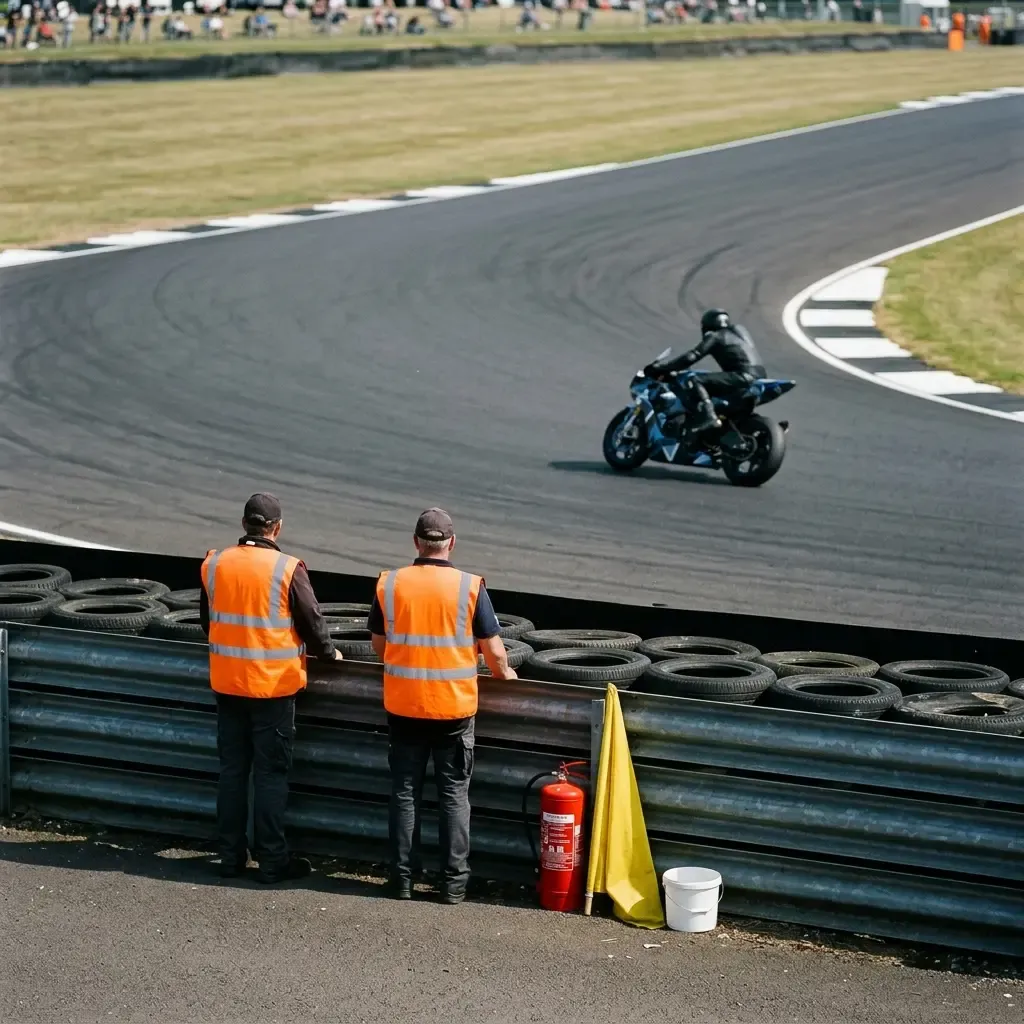
Rider safety doesn’t stop with the gear. The circuits themselves are designed with crashing in mind. You’ll notice huge areas on the outside of corners with nothing in them. These are called run-off areas, and their purpose is to give a sliding rider and bike plenty of space to slow down before hitting a barrier.
Many of these run-off areas are filled with deep gravel traps. While it looks uncomfortable, gravel is incredibly effective at slowing a person or a 160kg motorcycle from high speed very quickly and relatively safely, acting like a giant, soft brake.
Everything Working Together
Picture a rider losing the rear at high speed, the tyre suddenly gripping again and flinging them into the air in a violent highside. A crash like that could once have ended a career, but the safety systems now work in perfect harmony. The airbag deploys instantly, cushioning the torso, while the helmet absorbs the critical impact with the ground. As the rider tumbles through the gravel trap, their leathers protect them from abrasion.
That a rider can so often climb to their feet and walk away, and be back racing within weeks, is a powerful testament not just to their own incredible fitness, but to the amazing web of safety technology that allows these athletes to defy physics, and walk away when it goes wrong.
Quick Takeaways
- Riders are highly skilled at crashing, often preferring a controllable ‘lowside’ slide over a violent ‘highside’ tumble.
- The rider’s leather suit is for sliding, while an internal airbag system inflates in milliseconds to protect against the impact of the fall.
- Helmets use a crushable foam liner to absorb impact energy, which is why they must be replaced after a single significant crash.
- Race tracks are designed with huge run-off areas and gravel traps specifically to slow down crashing riders and bikes safely.