Jargon Buster
MotoGP Tech: What are Fairings and Winglets?
Ever wondered about the weird wings on a MotoGP bike? Our jargon-free guide explains fairings and winglets, how they work, and why they’re so important.
Independent fan site — not affiliated with MotoGP or MotoGP Sports Entertainment Group (formerly Dorna). Written by AI from official data and fact-checked: how this article was made.
The Spiky, Winged Monsters of the Racetrack
Look at a modern MotoGP bike and you might think you’ve stumbled upon a secret military project. Compared to the sleek, simple motorcycles you see on the road, these top-tier racing machines are covered in an array of sharp edges, strange ducts, and wild-looking wings. They look more like fighter jets than two-wheeled vehicles.
This aggressive look isn’t just for show. Every single curve and winglet is part of a complex science called aerodynamics, the study of how air moves around an object. In a sport where a thousandth of a second can be the difference between winning and losing, controlling the air is everything. The two key components in this battle are the fairings and the winglets.
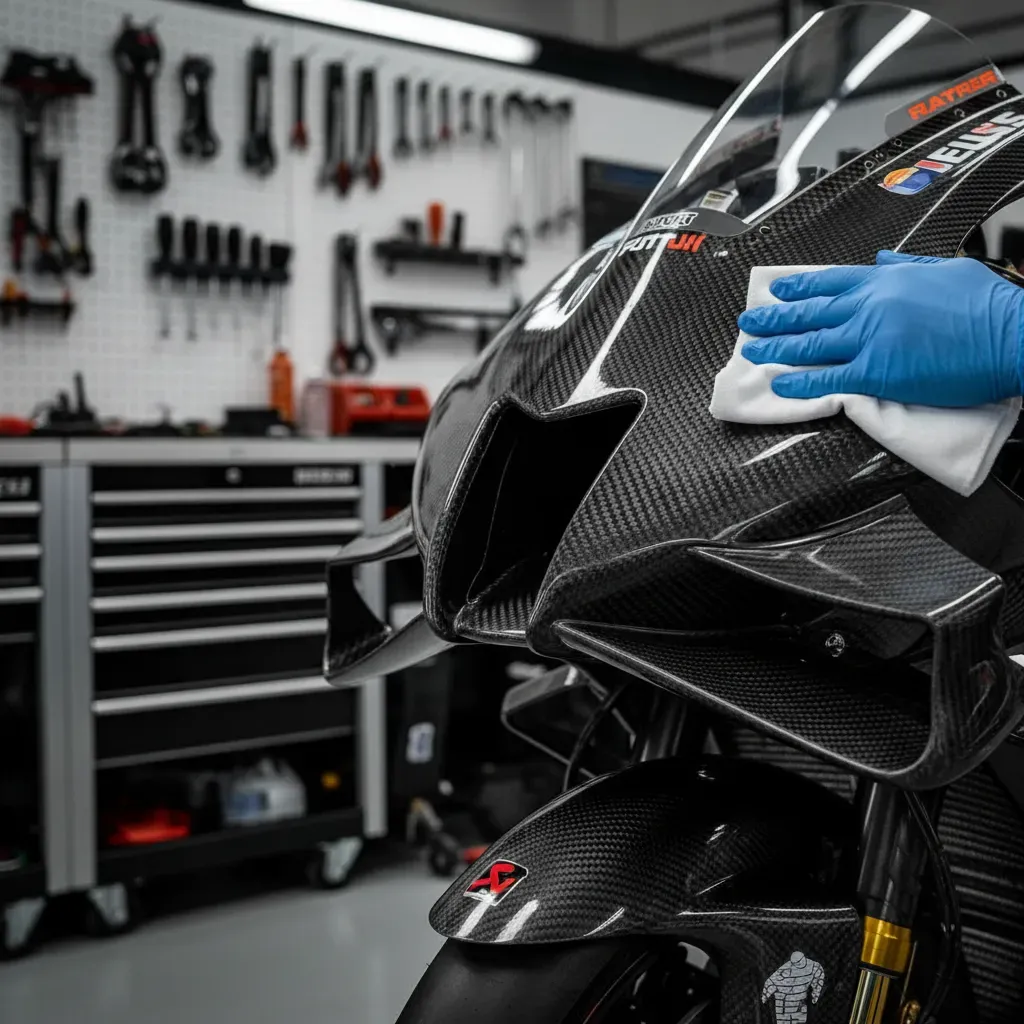
What are Fairings? The Bike’s Outer Shell
Fairings: The sleek, smooth bodywork that covers the engine and frame of the motorcycle.
Think of fairings as the bike’s skin. This outer shell, usually made from carbon fibre (an incredibly strong and lightweight material woven from black thread-like strands), is the first thing you see. Its primary job is to be as ‘slippery’ as possible, allowing the bike to cut through the air with minimum resistance.
This resistance is called ‘drag’. The less drag a bike has, the faster it can go on the long straights. Engineers spend countless hours in wind tunnels, just like those used for aeroplanes, perfecting the shape of the MotoGP fairings to make them as efficient as possible. They also cleverly shape the fairings to channel cool air towards the ferociously hot engine and radiator, preventing it from overheating.
So, What Are Those Crazy Wings?
Winglets: The small wings attached to the fairings, usually at the front and sometimes on the rear of the bike.
While fairings have been around for decades, the collection of wings sprouting from them is a much more recent development. These are officially called ‘aerodynamic appendages’, but everyone in the PaddockThe fenced-off working area behind the pits where teams, hospitality and motorhomes are based.Read the full guide → calls them winglets. They have completely changed the look and behaviour of MotoGP bikes in the last few years.
Their function is the exact opposite of an aeroplane’s wing. A plane’s wing is shaped to create lift, pushing the aircraft up into the sky. A MotoGP winglet is designed to do the reverse: it creates ‘downforce’.
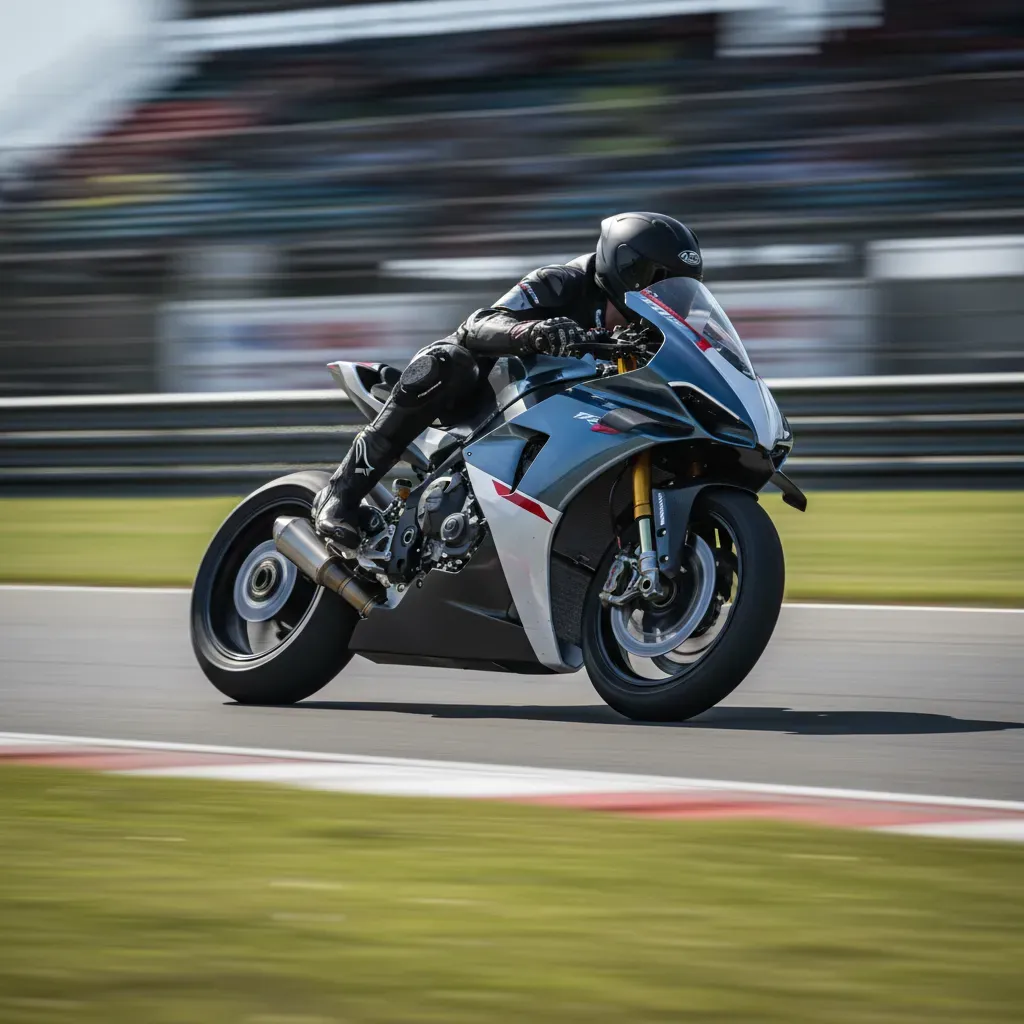
Downforce: The Invisible Hand Pushing Down
Downforce: An aerodynamic force that pushes the bike downwards onto the track surface at high speed.
It sounds complicated, but the principle is simple. Imagine you’re in a moving car and you stick your hand out of the window, palm parallel to the ground. Now, angle the front of your hand slightly downwards. You’ll feel the air pushing your hand down with surprising strength. That’s downforce.
The winglets on a MotoGP bike do exactly the same thing, but on a much larger scale. As the bike travels at speed, the air rushing over these wings generates a powerful force that pushes the whole machine down, pressing its tyres firmly into the tarmac. This effectively makes the bike ‘heavier’ without adding a single gram of actual weight, and that extra ‘weight’ is the key to going faster.
Why Bother With All This? Two Big Reasons
Creating downforce offers two huge advantages that help riders shave precious tenths of a second off their lap times.
Stopping Unwanted Wheelies
A MotoGP bike has over 300 horsepower. When a rider opens the throttle, that immense power tries to make the bike pivot around its rear wheel, lifting the front wheel into the air. This is known as a ‘wheelie’.
While a wheelie might look spectacular, it’s the enemy of performance. If the front wheel is in the air, you can’t steer, and the bike’s electronic systems have to cut engine power to bring it back down. This all wastes time. The downforce generated by the front winglets acts like an invisible hand, pushing the front end down during acceleration and keeping the tyre on the ground. This allows the rider to use more of the engine’s brutal power, more of the time.
More Grip, More Speed
The second major benefit of downforce is found in the corners. By pushing the tyres harder into the track surface, downforce creates more grip. More grip means the rider can lean the bike over further, brake later, and carry much more speed through fast, sweeping corners.
This also makes the bike more stable and predictable when it’s leaned over at over 200 kilometres per hour. The rider has a better feeling for what the tyres are doing, giving them the confidence to push right to the limit.
The Great “Aero War” of MotoGP
Because these aerodynamic parts are so effective, their development has become a major battleground between the manufacturers. This so-called ‘aero war’ has seen factories, particularly European brands like Ducati, KTM, and Aprilia, bring ever more radical and complex designs to the track.
You’ll see teams testing new fairings and winglet packages constantly, sometimes even having different designs on their two riders’ bikes at the same time. Finding even a small aerodynamic advantage can be the key to winning. This is especially true as the current 1000cc engine rules are in their final year; with engine development tightly controlled, aerodynamics is one of the last areas for true innovation.
So next time you watch a race, pay close attention to the front of the bikes. Those bizarre wings and scoops aren’t just for decoration. They are the cutting edge of motorcycle technology, turning these machines into ground-hugging missiles capable of unbelievable speed.
Quick Takeaways
- Fairings are the bike’s outer shell, designed to cut through the air as cleanly as possible to increase Top speedThe fastest a bike goes on a lap, reached at the end of the longest straight — over 360 km/h at the quickest circuits.Read the full guide →.
- Winglets are the wings on the fairings that create ‘downforce’—an invisible force pushing the bike onto the track.
- Downforce is crucial for two reasons: it prevents the front wheel from lifting (a ‘wheelie’) under acceleration and it provides more grip and stability in fast corners.
- The design of these aerodynamic parts is a huge area of competition between manufacturers, known as the ‘aero war’.