Tracks
Valencia Track Guide: Your Guide to the Season Finale
Our jargon-free Valencia MotoGP guide! Discover the Ricardo Tormo Circuit’s unique stadium layout, key corners, and why it’s a dramatic season finale.
Independent fan site — not affiliated with MotoGP or MotoGP Sports Entertainment Group (formerly Dorna). Written by AI from official data and fact-checked: how this article was made.
Valencian Grand Prix
Circuit Ricardo Tormo
The traditional season finale — a compact, stadium-style circuit ringed by grandstands so fans can see almost the whole lap. Tight, low-speed and often where the championship is settled.
Schematic layout · not to scale
Watch Turns 1 and 2. At the end of the main straight the bikes brake into a sweeping left, then straight into the tighter left of Turn 2 — the whole pack funnels together here on lap one, and with a title often on the line, the pressure is enormous. Follow those two corners.
The Grand Finale in a Gladiator’s Arena
Welcome to the traditional final showdown of the MotoGP season. The Circuit Ricardo Tormo, just outside the vibrant Spanish city of Valencia, isn’t just another racetrack; it’s a purpose-built amphitheatre for motorcycle racing. It’s where championships are won and lost, where heroes are made, and where the curtain falls on another year of incredible action.
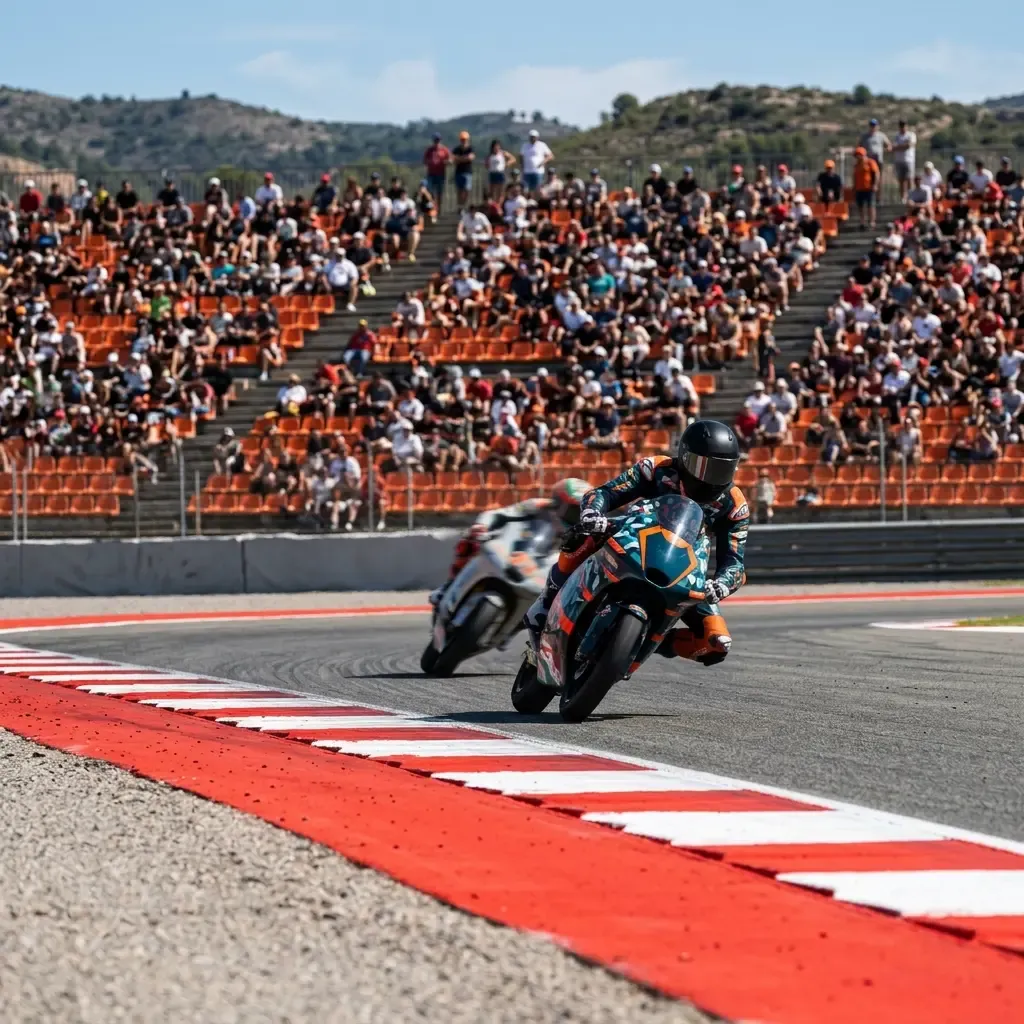
What makes Valencia truly special is its layout. The track sits in a natural bowl, with grandstands built all the way around. This ‘stadium’ design means that from most seats, fans can see almost the entire circuit. It creates an intense, deafening atmosphere, as the roar of the engines is trapped, echoing around you as the riders battle below.
Location and Atmosphere: A Spanish Fiesta
Located in Cheste, a short drive from the beautiful coastal city of Valencia, the circuit buzzes with a unique energy. The race weekend is a true Spanish fiesta, filled with passionate fans who have followed the championship all year long. The air is thick with anticipation, especially when the title is on the line.
The noise is a physical thing here. Every cheer, every gasp, every roar from the crowd is amplified by the stadium bowl. As a spectator, you feel completely immersed in the action, sharing every dramatic moment with tens of thousands of other fans.
The Track Itself: A Go-Kart Circuit for Giants
Riders often describe Valencia as being like a ‘go-kart track’. This is because it’s relatively short, incredibly twisty, and has a lot of slow-speed corners packed tightly together. It runs anti-clockwise, which is less common in MotoGP, and demands a very precise and technical riding style.
The bikes are constantly turning, braking, and accelerating, with very little time to rest on long straights. This puts a huge emphasis on a bike’s agility and a rider’s skill in navigating tight spaces. It’s a physical and mental test, right up to the final lap.
Key Corners to Watch
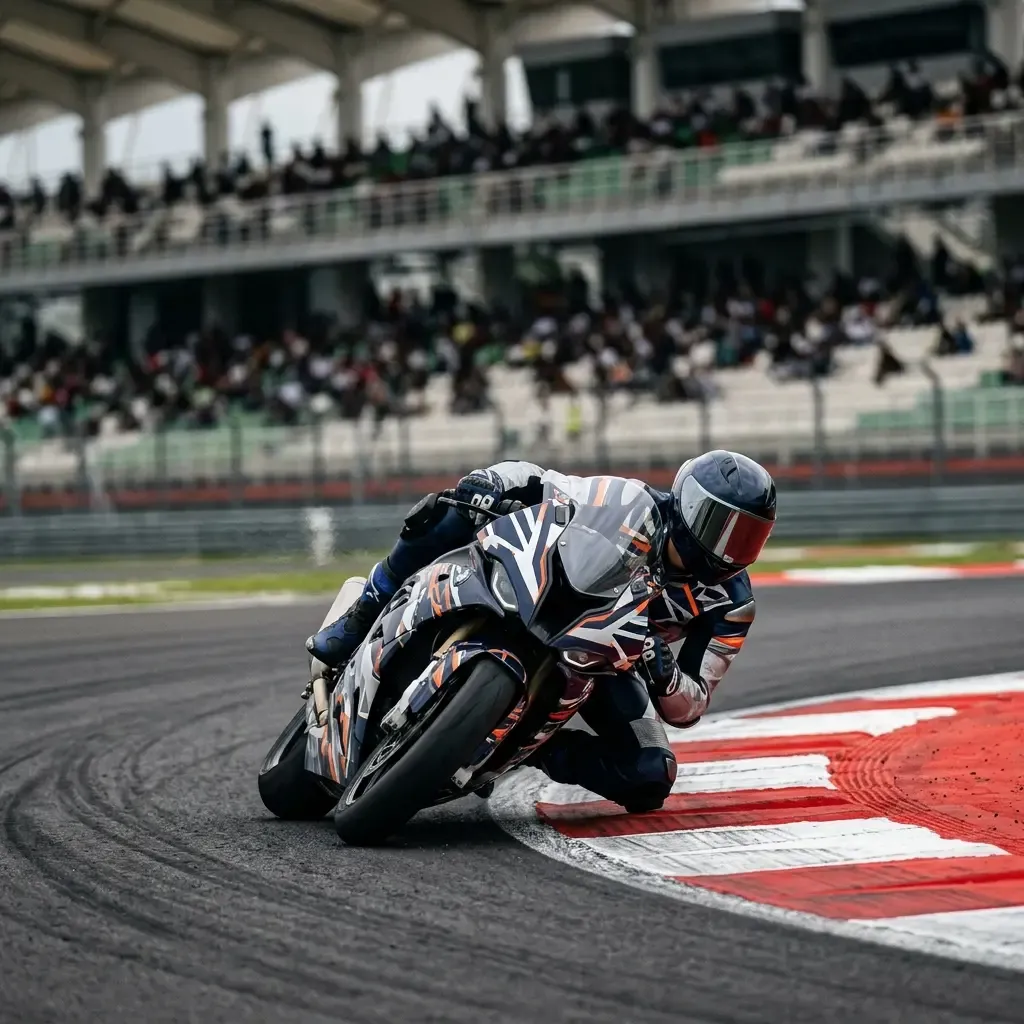
While every turn is a challenge, a few stand out as being crucial for a good lap time and for creating drama during the race.
Turn 1: The First Big Test
After the start-finish straight, the riders pour into Turn 1, a long, sweeping left-hander named after Spanish legend Jorge Martínez ‘Aspar’. It’s a bottleneck on the opening lap, with 22 riders all trying to find the same piece of tarmac. It’s a place where a good start can be rewarded, but a small mistake can send a rider tumbling down the order.
Turn 2: The First Overtaking Hotspot
Immediately after the sweeping Turn 1, riders have to slam on the brakes for the tighter left-hander at Turn 2, named after Mick Doohan. The hard stop makes it a prime spot for overtaking. A brave rider can dive up the inside here, but they have to be careful not to run wide on the exit. It’s a classic risk-versus-reward corner.
Turn 14: The Final Hurdle
The last corner of the lap, the Curva Adrián Campos, is one of the most important on the entire MotoGP calendar. This long, tricky left-hander leads back onto the main straight. Getting a good drive out of this corner is everything. It’s the place where last-lap lunges are made and where championships can be decided in the final few hundred metres. A small mistake here can be disastrous.
Race Characteristics: Patience is a Virtue
Because the track is so tight and twisty, overtaking is notoriously difficult. There’s only one long straight where riders can use their bike’s Top speedThe fastest a bike goes on a lap, reached at the end of the longest straight — over 360 km/h at the quickest circuits.Read the full guide → to pass. This means that QualifyingThe timed sessions that set the starting order, split into Q1 and Q2 for the front rows.Read the full guide → – the timed session on Saturday that decides the starting positions for the race – is incredibly important. Starting from the front of the grid is a huge advantage.
Races here are often a tense game of cat and mouse. Riders have to be patient, manage their tyres (the rubber wheels that provide grip), and wait for the perfect moment to make a move. The constant cornering can cause the tyres to wear out quickly, so being smooth and precise is key to being fast at the end of the race.
As a fun fact, the 2026 Valencia Grand Prix closes the 1000cc era: from 2027, MotoGP bikes use smaller 850cc engines.
Beginner Viewing Tips
The beauty of Valencia is that there are very few bad seats. The main grandstands opposite the Pit laneThe slow lane beside the track where teams work on the bikes and riders enter and exit.Read the full guide → give you a great view of the start, the finish, and the frantic action in the pit lane, where teams work on the bikes. However, sitting higher up in the stands around Turns 1 and 2 will give you a panoramic view of almost the whole track, allowing you to follow the battles as they unfold across the entire lap.
No matter where you sit, the stadium layout ensures you’ll be part of the incredible, electrifying atmosphere that makes the Valencia season finale one of the most memorable events in motorsport.
Quick Takeaways
- The Stadium Experience: Valencia’s unique ‘amphitheatre’ layout means you can see most of the track from your seat, creating an incredible atmosphere.
- A Technical Challenge: It’s a tight, slow, and twisty circuit often called a ‘go-kart track’, which makes overtaking very difficult.
- Qualifying is Crucial: Because passing is so hard, a rider’s starting position is more important here than at many other circuits.
- The Final Showdown: As the traditional last race of the year, it’s often where the world championship is decided in the most dramatic fashion.