Jargon Buster
What is Parc Fermé in MotoGP?
Ever heard the term ‘parc fermé’ in MotoGP and wondered what it means? Our jargon-free guide explains this crucial secure area where bikes go after a race.
Independent fan site — not affiliated with MotoGP or MotoGP Sports Entertainment Group (formerly Dorna). Written by AI from official data and fact-checked: how this article was made.
The Final Stop After the Chequered Flag
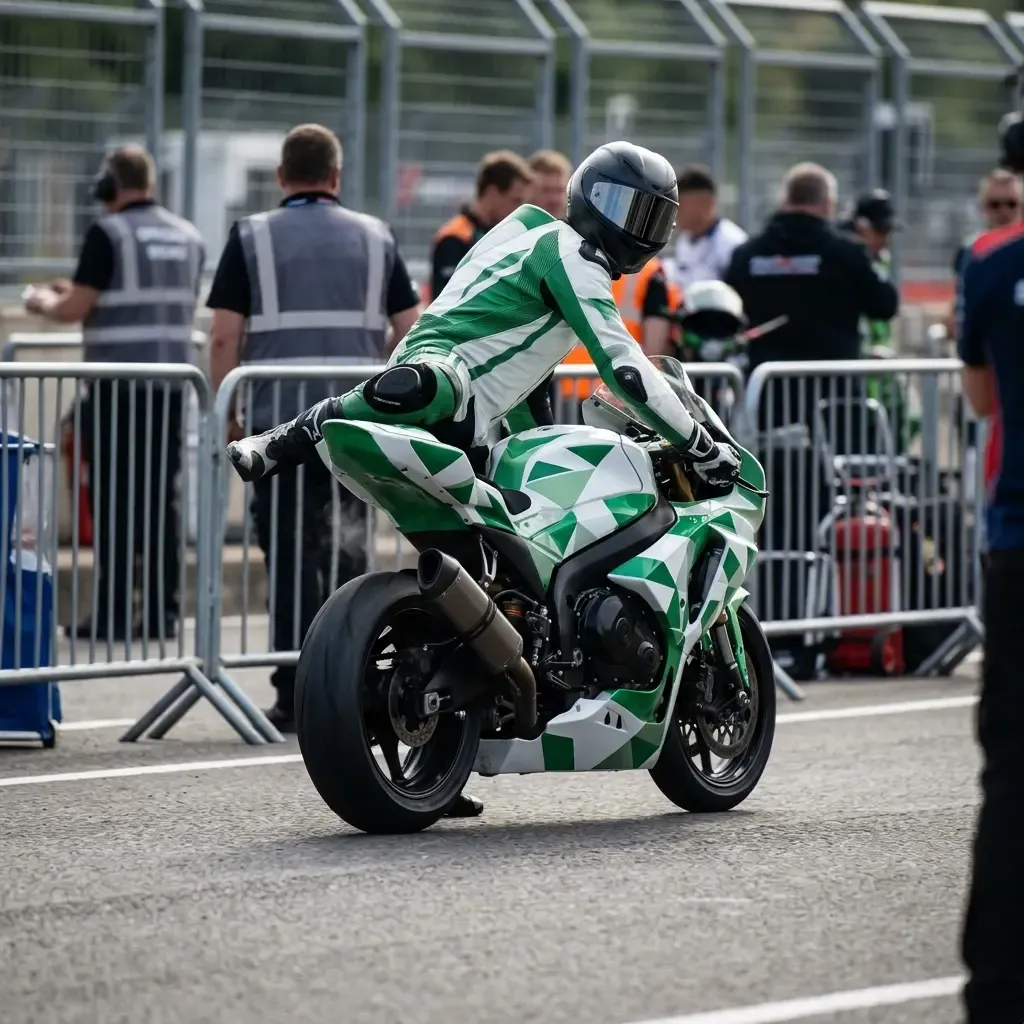
Imagine the scene: a thrilling MotoGP race has just ended. The winner is celebrating, the crowd is roaring, and the top three riders pull into the Pit laneThe slow lane beside the track where teams work on the bikes and riders enter and exit.Read the full guide →, basking in the glory of their podium finish. But before the champagne flows, they ride their bikes to a special, roped-off area. This place is called Parc Fermé.
It might sound like a fancy French phrase, and that’s because it is. But its role in MotoGP is simple, serious, and absolutely essential for fair racing. Without it, the entire sport would be very different.
What is Parc Fermé?
Parc Fermé: A secure, controlled area where motorcycles are held for technical inspection immediately after QualifyingThe timed sessions that set the starting order, split into Q1 and Q2 for the front rows.Read the full guide → or a race.
Pronounced ‘park fur-may’, the name literally translates from French as ‘closed park’. Think of it as a quarantine zone for the fastest motorcycles on the planet. Once a bike enters parc fermé, it is under the complete control of the race officials until they give the all-clear.
When Will I Hear This Term?
You will hear commentators mention parc fermé at two key moments during a race weekend: right after the final qualifying session and immediately after the race itself. They’ll say something like, “The Pole positionFirst place on the starting grid, earned by the fastest qualifying lap.Read the full guide →-sitter rides his bike straight into parc fermé.”
This is because the top three finishers in both of these crucial sessions are required to take their bikes there directly. There are no detours to their garage, no quick chats with their mechanics – they ride straight from the track to the closed park.
Why is it So Important?
Parc fermé is all about one thing: fairness. MotoGP is a sport of tiny margins, where teams spend millions trying to find a thousandth of a second. To ensure nobody gains an illegal advantage, there is a very strict rulebook governing every single part of the motorcycle.
The purpose of parc fermé is to give the official technical inspectors, known as scrutineers, the chance to check that the bikes comply with these rules. By taking the bikes immediately after a session, officials ensure that no unapproved changes can be made before inspection. It guarantees that the bike that achieved the result on track is the exact same one being checked.
What Happens Inside Parc Fermé?
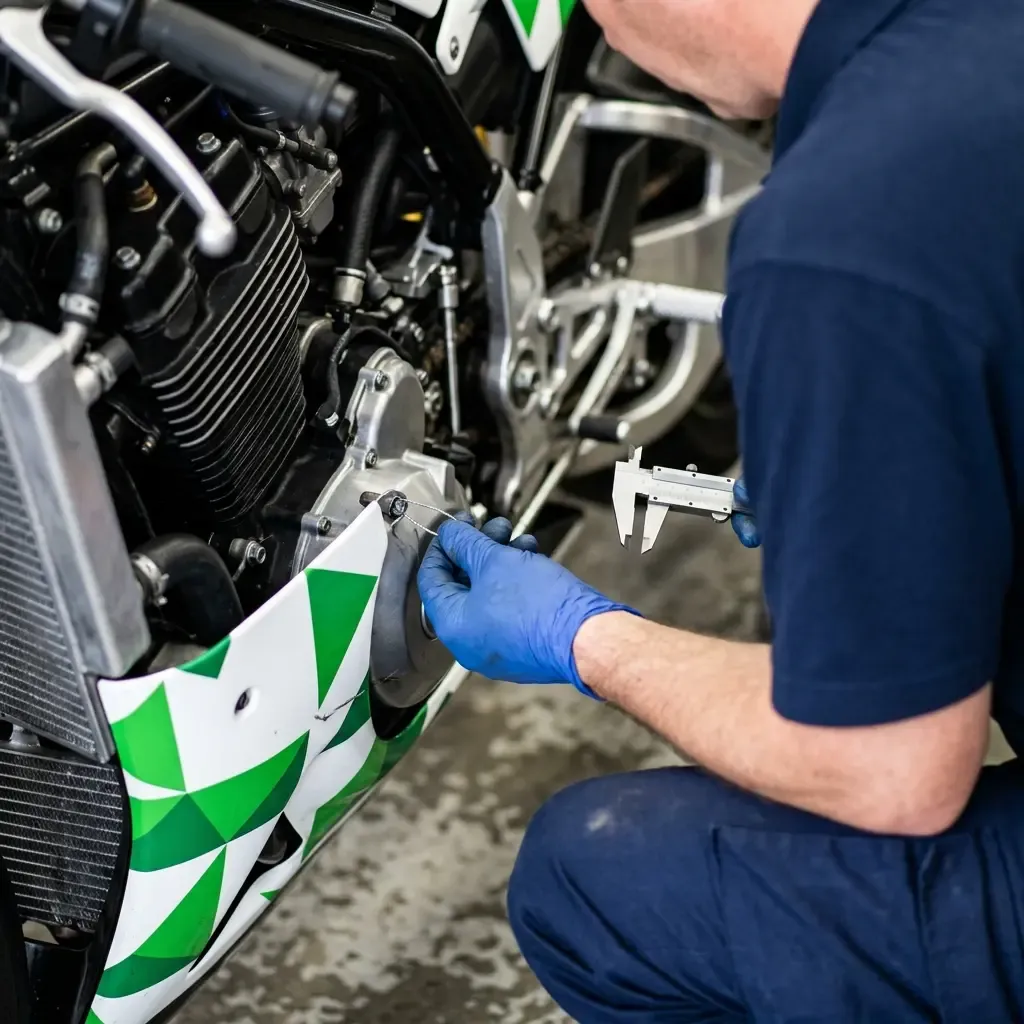
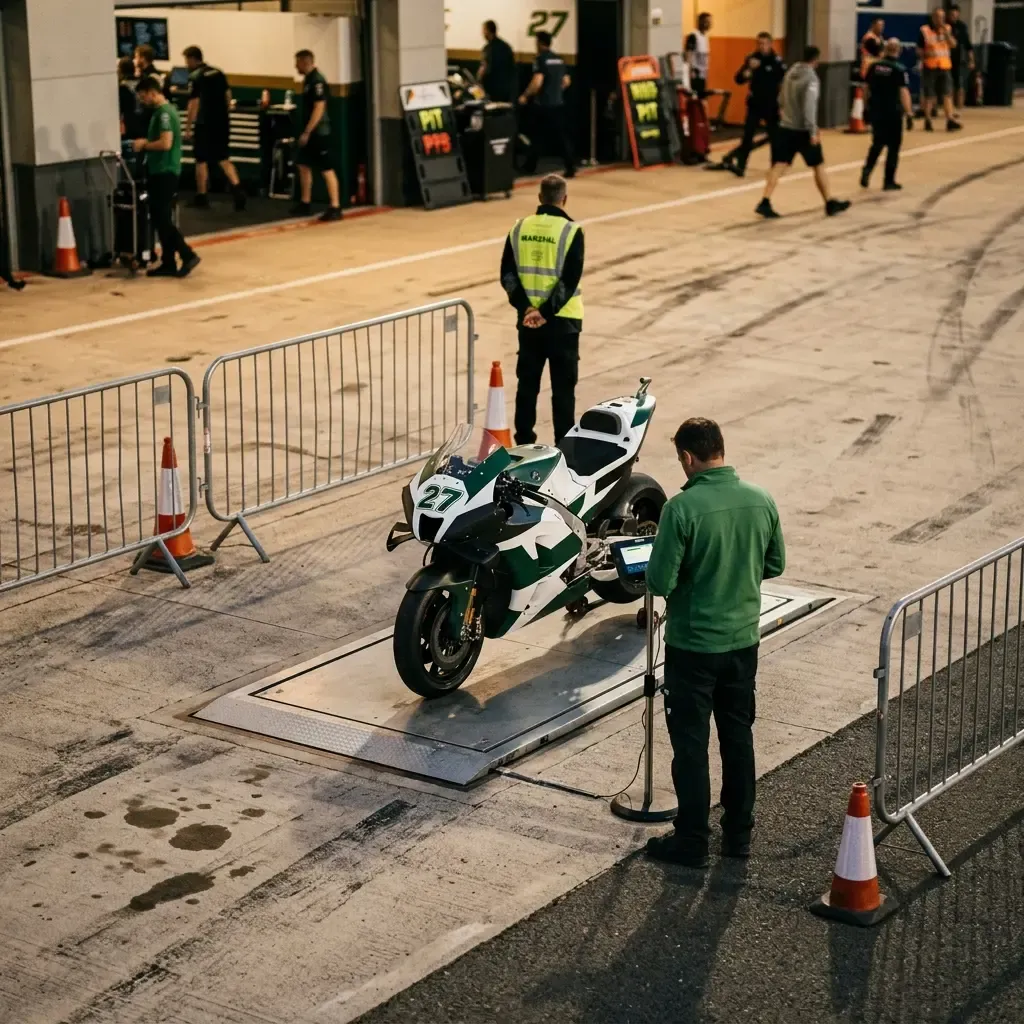
While the riders are busy with podium celebrations and media interviews, their prize-winning machines are undergoing a thorough health check. The bikes are lined up, and only race officials are allowed inside the cordoned-off area.
The technical team, organised by the sport’s governing body (the FIM), gets to work. They might check a range of things:
- Weight: Each bike is weighed to ensure it meets the minimum weight limit. A lighter bike is faster, so this rule prevents teams from building underweight machines.
- Fuel Sample: A small sample of fuel is taken from the tank and sent to a lab for analysis. This confirms that the team is using the regulation fuel and hasn’t added any illegal performance-enhancing substances.
- Engine and Chassis Checks: Officials will check official seals placed on the engines at the start of the season to make sure they haven’t been tampered with. They might also use special tools to measure parts of the bike’s chassis to confirm it meets the design rules.
- Electronics: The bike’s electronic control unit (ECU), the ‘brain’ of the motorcycle, may be checked to ensure it’s running the approved software.
It’s not just the top three, either. Officials can randomly select any other bike from the grid for the same detailed inspection to keep all the teams on their toes.
What if a Bike Fails the Checks?
This is where parc fermé shows its teeth. If a bike is found to be outside the technical regulations – even by a tiny amount – the consequences are severe. A rider can have their lap times deleted, be disqualified from the race results, and lose all the championship points they just fought so hard for.
This is why teams have their own engineers double- and triple-checking every component. A mistake that leads to a parc fermé failure can undo a whole weekend of brilliant work. So, when a rider puts their bike on pole position at a Grand Prix, their bike going straight to parc fermé isn’t just a procedure; it’s the moment their achievement is officially validated.
More Than Just a Car Park
So, next time you see the top riders dismount in that special enclosure, you’ll know it’s not just a fancy parking spot. Parc fermé is the silent guardian of MotoGP’s integrity. It’s a simple concept that ensures the incredible skill of the riders and the genius of the engineers is channelled into a fair and spectacular competition for everyone.
Quick Takeaways
- Parc Fermé is French for ‘closed park’ and is a secure area for post-session bike inspections.
- The top three bikes from qualifying and the race go there immediately to be checked by officials, ensuring no tampering can occur.
- Its main purpose is to ensure fairness by confirming all bikes comply with strict technical regulations on things like weight, fuel, and engine specifications.
- No team members can touch the bikes in parc fermé until they are officially released by the race stewards.
- Failing an inspection in parc fermé results in severe penalties, including disqualification from the race.