Beginner Guides
MotoGP Tyres Explained: Soft, Medium, Hard and More
Ever wondered about MotoGP tyres? Our jargon-free guide explains soft, medium, and hard compounds and why they’re crucial for race strategy.
Independent fan site — not affiliated with MotoGP or MotoGP Sports Entertainment Group (formerly Dorna). Written by AI from official data and fact-checked: how this article was made.
The Most Important Part of the Bike?
Imagine a ridiculously powerful, 1,000cc racing machine that can hit speeds over 220 mph. Now, think about what connects all that power and technology to the race track. It’s just two small patches of rubber, each about the size of a credit card.
That’s it. Those two tiny contact patches are everything. In the world of MotoGP, tyres aren’t just accessories; they are arguably the single most important performance factor, and understanding them is key to understanding the racing.
First, What is a ‘Slick’ Tyre?
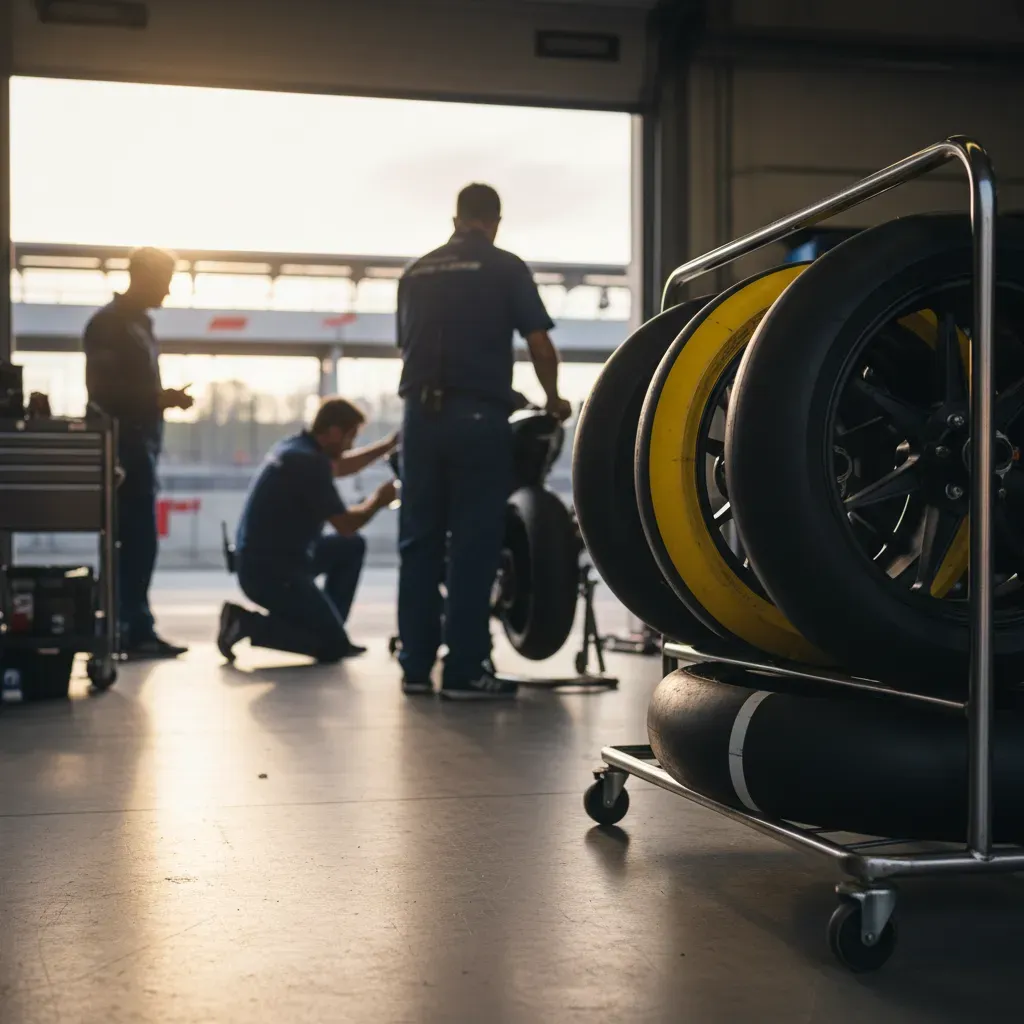
When you look at a MotoGP bike, you’ll notice its tyres are completely smooth, with no grooves or patterns like the ones on your road car. These are called Slick tyresCompletely smooth dry-weather tyres — no tread, so the maximum amount of rubber touches the track for grip.Read the full guide →. Their smooth surface is designed to put the maximum amount of rubber in contact with the dry tarmac, giving them an incredible amount of grip.
This grip is what allows riders to lean over at impossible angles in corners and accelerate with ferocious power. Of course, this means they are useless in the rain, which is why there’s a whole other type of treaded ‘wet’ tyre for rainy days.
The Main Menu: Soft, Medium, and Hard
Not all slick tyres are created equal. They are made from different rubber mixtures, known as compounds. Think of it like a recipe: different ingredients and baking times result in different types of cake. In MotoGP, the main ‘flavours’ of tyre are soft, medium, and hard.
The Soft Tyre: Maximum Grip, Short Life
The soft compound tyre is the stickiest of them all. It heats up very quickly and provides phenomenal grip, allowing a rider to push to the absolute limit almost immediately. It’s perfect for a flying QualifyingThe timed sessions that set the starting order, split into Q1 and Q2 for the front rows.Read the full guide → lap where you need one burst of ultimate speed.
The downside? It wears out very fast. Like a pencil eraser, the sticky rubber gets used up quickly. Using a soft tyre for a full-length race is a huge gamble; it might give you an early lead, but it could fall apart in the final laps, leaving you struggling.
The Hard Tyre: Built to Last
At the other end of the spectrum is the hard compound. This tyre is made from a much more durable rubber. It takes longer to warm up to its ideal operating temperature and offers less outright grip than the soft tyre.
Its strength is its endurance. For long races, especially at hot, abrasive circuits that punish tyres, the hard compound offers consistency. A rider on a hard tyre might be a little slower in the opening laps but can often come on strong at the end as others on softer tyres begin to fade.
The Medium Tyre: The Best of Both Worlds
As you’ve probably guessed, the medium compound is the happy medium. It offers a good balance between the grip of the soft tyre and the durability of the hard one. It’s a versatile, safe choice and is often the most popular option for the main Sunday race.
A Different Choice for Front and Rear
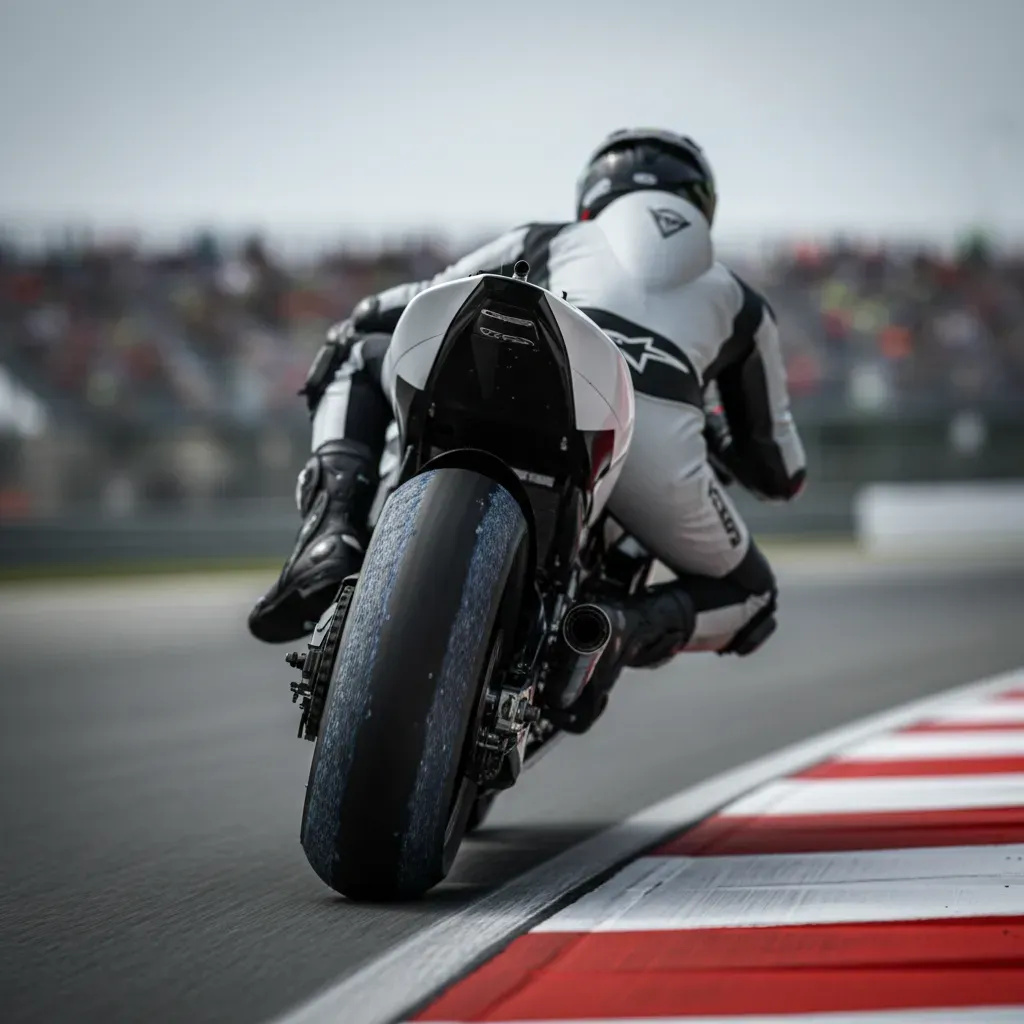
A rider’s choice isn’t just one tyre; it’s two. They can mix and match compounds for the front and rear. The front tyre is crucial for braking and turning, while the rear tyre has to handle the massive power delivery during acceleration.
A rider might choose a medium front for stable braking but a soft rear to get extra grip when powering out of slow corners. This choice depends on the track layout, the weather, the bike’s behaviour, and the rider’s personal style, making it a complex strategic decision.
One-Sided Story: The Asymmetric Tyre
Some tracks have a very unbalanced layout. For example, Germany’s Sachsenring has ten left-hand corners but only three right-handers. This means the left side of the tyre is working hard and getting very hot for most of the lap, while the right side is barely used and struggles to stay warm.
The solution is an asymmetric tyre. This is a special tyre built with two different compounds. For a track like the Sachsenring, the left side will be made of a harder, more durable compound to cope with the heavy use, while the right side will be a softer compound designed to heat up quickly and provide grip for those few crucial right turns.
Limited Supply: The Tyre Allocation
To make things even more interesting, teams don’t have an unlimited supply of tyres. For each race weekend, every rider receives a strict tyre allocation – a specific, limited number of soft, medium, and hard tyres for both the front and rear. This is all managed by the sport’s official tyre supplier.
This forces teams to be strategic. They have to carefully plan which tyres to use in PracticeSessions before qualifying where riders set up the bike; the top ten in Friday afternoon's Practice go straight to Q2.Read the full guide → sessions versus which ones to save for qualifying and the race. Using up your favourite tyre compound before the main event could be a disaster.
A Changing of the Guard
For many years, the French company Michelin has been the sole, official tyre supplier to MotoGP. They develop and provide the entire tyre allocation for every rider on the grid.
However, a big change is on the horizon. The 2026 season will be Michelin’s last, and from 2027, the Italian manufacturer Pirelli will take over as the exclusive supplier. This will present a huge new challenge for teams and riders as they adapt to completely new tyre characteristics.

Tyres Make the Race
So, next time you watch a MotoGP race, pay close attention to the graphics that show which rider is on which tyre combination. The entire story of the race is often written in those choices. Will the rider on the soft tyres who shot into the lead be able to hang on? Can the rider who chose the hards manage their pace and pounce at the end?
It’s a high-stakes game of chess played at 200 mph, and it all comes down to those two small patches of rubber.
Quick Takeaways
- MotoGP uses slick tyres (no tread) which come in Soft, Medium, and Hard compounds.
- There is a simple trade-off: Soft tyres have more grip but wear out fast, while Hard tyres last longer but have less grip.
- Riders choose different compounds for the front and rear tyres, and can even use asymmetric tyres with different rubber on each side for specific tracks.
- Choosing the right tyre is a critical part of race strategy, as each rider gets a limited allocation for the weekend.