Jargon Buster
What are Intermediate Tyres in MotoGP?
Intermediate tyres are an in-between option for a damp track. MotoGP tried them in 2016 and dropped them, so today riders choose between slicks and rain tyres.
Independent fan site — not affiliated with MotoGP or MotoGP Sports Entertainment Group (formerly Dorna). Written by AI from official data and fact-checked: how this article was made.
That Awkward Weather Moment
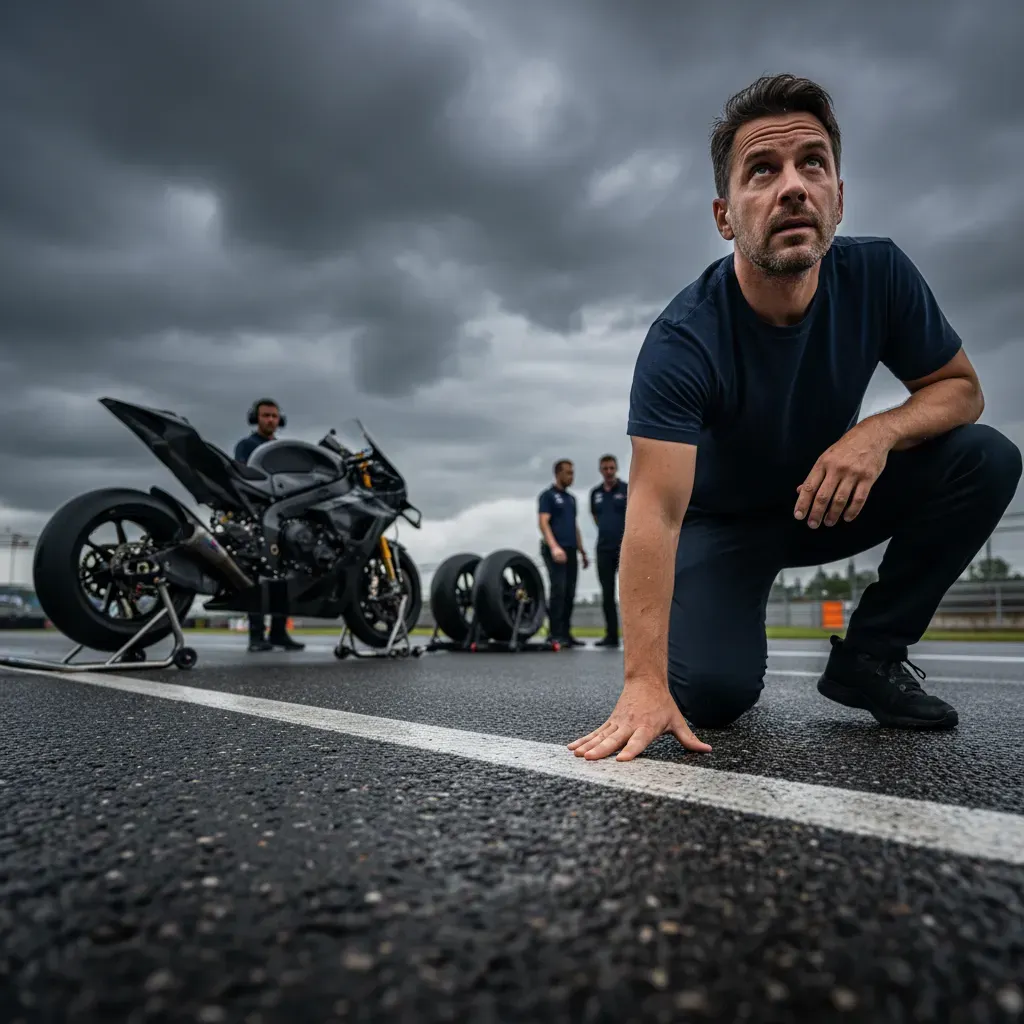
Imagine the scene: the race started in the rain, but now a weak sun is breaking through the clouds. The track isn’t soaking wet anymore, but it’s definitely not dry. Riders on full Wet tyresGrooved tyres that channel water away so the bike can grip a wet track.Read the full guide → are starting to struggle as their rubber overheats, but Slick tyresCompletely smooth dry-weather tyres — no tread, so the maximum amount of rubber touches the track for grip.Read the full guide → (the ones with no tread pattern, for dry conditions) could still be dangerously slippery.
In many forms of racing, this is the moment for an intermediate tyre. In MotoGP, it isn’t, and that surprises a lot of new fans.
Jargon Buster: Intermediate Tyres
Intermediate Tyre: A racing tyre for a damp or drying track, with a lighter tread pattern than a full rain tyre, designed as a compromise between a dry-weather slick and a wet-weather tyre.
A slick tyre is completely smooth, to put the maximum amount of rubber on the ground in the dry. A rain tyre has deep grooves cut into it to pump water away from the contact patch, stopping the bike from skating on the water’s surface. An intermediate sits in between, with shallower grooves: enough to clear a little water, while keeping more rubber on the tarmac than a rain tyre.
Does MotoGP Use Them?
No. MotoGP’s official tyre supplier, Michelin, provides just two types of tyre: slicks for dry conditions and rain tyres for wet conditions. Each comes in a small range of compounds (softer or harder rubber), but there is no intermediate.
MotoGP did try one. When Michelin became the sole tyre supplier in 2016, it brought an intermediate tyre to races. Riders barely used it: the conditions where an intermediate is the best choice turned out to be very narrow, and in changeable weather most preferred to stay on rain tyres or switch straight to slicks. The intermediate was dropped for the 2017 season, and MotoGP has run with just slicks and rain tyres ever since.
So What Happens on a Drying Track?
The gamble doesn’t disappear; it just changes shape. Without an in-between tyre, the big decision is when to switch from rain tyres to slicks.
In MotoGP, that switch means a Pit stopIn MotoGP, coming into the pit lane mid-race to swap to a second bike — usually because the weather has changed.Read the full guide → to swap bikes. Each rider has a second bike ready in the garage, and in a Flag-to-flagA race where the weather changes and riders pit to switch bikes without the race stopping.Read the full guide → they can come into the Pit laneThe slow lane beside the track where teams work on the bikes and riders enter and exit.Read the full guide → and change to it.
What Happens When the Gamble Goes Wrong?
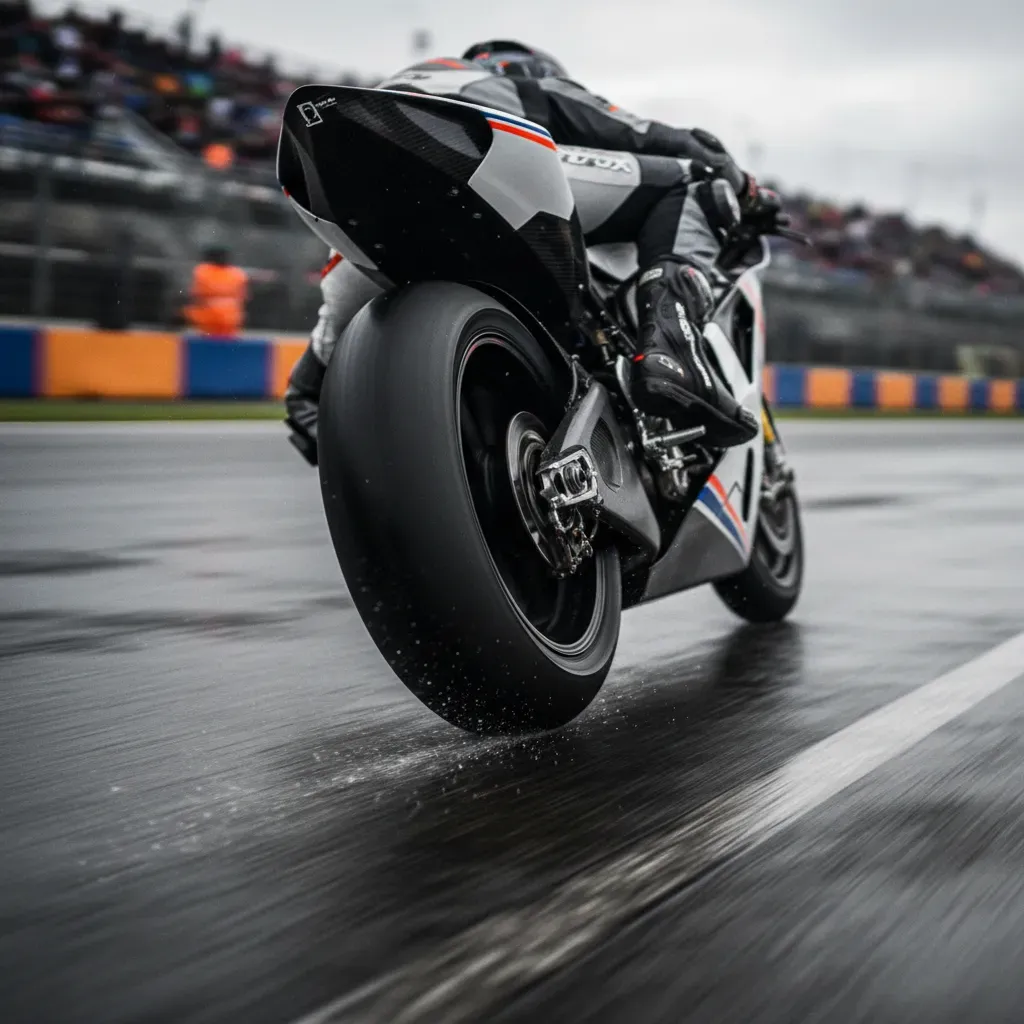
Switch to slicks too early, while the track is still damp, and the smooth tyres struggle to find grip. The rider has to tiptoe around, losing time and risking a crash.
Stay on rain tyres too long as the track dries, and the soft, grooved rubber overheats and wears quickly on the dry tarmac. You will often see riders deliberately steering off the Dry lineThe strip of track that dries first as rubber and warmth build up, giving the most grip.Read the full guide → into wet patches, trying to cool their tyres down.
What Happens When It Pays Off?
Time the switch to slicks perfectly, and a rider can be seconds per lap faster than everyone still on rain tyres. It’s a strategic masterstroke that can turn a mid-pack rider into a race winner, especially at circuits known for unpredictable weather, like Assen in the Netherlands or Silverstone in the UK.
A Test of Nerve
So next time you see a damp but drying track in MotoGP, watch the pit lane closely. There’s no in-between tyre to hide behind, so the decision comes down to reading the conditions and having the courage to make the right call at the right time.
Quick Takeaways
- Intermediate tyres are an ‘in-between’ option with a light tread pattern, designed for tracks that are damp or drying.
- MotoGP doesn’t use them. Michelin supplies only slicks and rain tyres, after an intermediate offered in 2016 was dropped for 2017.
- On a drying track, MotoGP riders choose between rain tyres and slicks. The key gamble is when to pit and swap to the bike on slicks.
- Get the timing right and a rider can gain seconds per lap. Get it wrong and they’re left struggling for grip or wearing out their rain tyres.
Quick questions
- Q.Does MotoGP use intermediate tyres?
- No. MotoGP's tyre supplier, Michelin, provides only two types of tyre: slicks for the dry and rain tyres for the wet. An intermediate was offered in 2016 but was dropped for the 2017 season.
- Q.Why were intermediate tyres dropped from MotoGP?
- Riders hardly used them. The conditions where an intermediate is the best choice are narrow, and in changeable weather riders generally preferred to stay on rain tyres or switch straight to slicks.
- Q.What do MotoGP riders use on a damp or drying track?
- Either rain tyres or slicks. On a drying track the big decision is when to switch from rain tyres to slicks, which in MotoGP means coming into the pit lane and swapping to their second bike.