News
Your Beginner's Guide to the British Grand Prix at Silverstone
Get ready for the British Grand Prix! Our beginner's guide explains the historic Silverstone circuit, its high-speed challenges, and why it's a must-see race.
The MotoGP World Championship is heading to the United Kingdom for one of the most historic and exciting events on the calendar: the British Grand Prix at the legendary Silverstone circuit. For new fans, this is a perfect race to see what makes MotoGP so special.
It’s a weekend packed with drama, incredible speed, and often, unpredictable weather. Let’s break down what you need to know about this classic event.
What makes Silverstone so special?
Silverstone is a track steeped in history. Originally a World War II airfield, it was converted into a race track and has been hosting Grands Prix for decades. It’s one of the longest circuits on the calendar, measuring a huge 5.9 kilometres (about 3.7 miles).
Its most famous characteristic is its speed. Silverstone is a fast, flowing circuit with an incredibly high average speed. This means riders spend a lot of time at full throttle, testing their courage and the performance of their machines to the absolute limit. It’s a favourite for many riders because its layout rewards bravery and precision.
What is the circuit layout like?
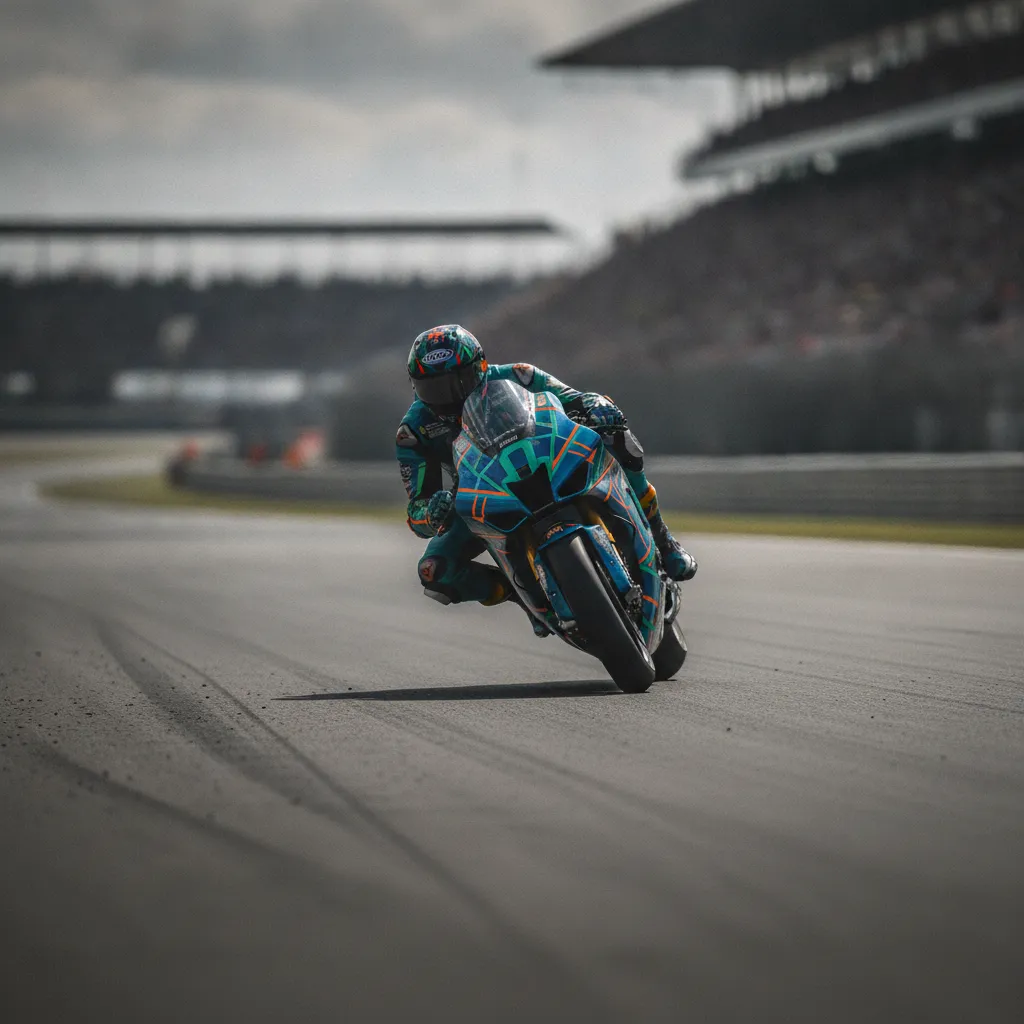
The track is a thrilling mix of long, fast straights and complex, high-speed corners. Unlike tighter circuits with lots of slow turns, Silverstone is all about maintaining momentum. The most famous section is the breathtaking sequence of corners called Maggotts, Becketts, and Chapel, where riders flick their bikes from left to right at immense speeds without much braking.
Then you have the long straights, like the Hangar Straight and Wellington Straight. Here, the bikes will reach their top speeds, often exceeding 330 km/h (over 205 mph). This is where you’ll see a lot of SlipstreamThe pocket of calmer air directly behind another bike. Sitting in it means less wind resistance — so you can carry more speed for free.Read the full guide → – a tactic where one rider follows closely behind another to use the hole in the air to gain speed for an overtake.
The combination of 18 corners (eight left-handers and ten right-handers) and these massive straights makes for fantastic racing. It provides plenty of opportunities for riders to battle for position, making it a thrilling spectacle from start to finish.
What challenges do riders and teams face?
Silverstone isn’t just about being brave; it’s a huge technical challenge. The high-speed corners put enormous stress on the tyres. Teams must choose the right tyre compounds – the specific rubber mix used – to make sure they last the whole race distance without losing grip. Getting this wrong can ruin a rider’s chances.
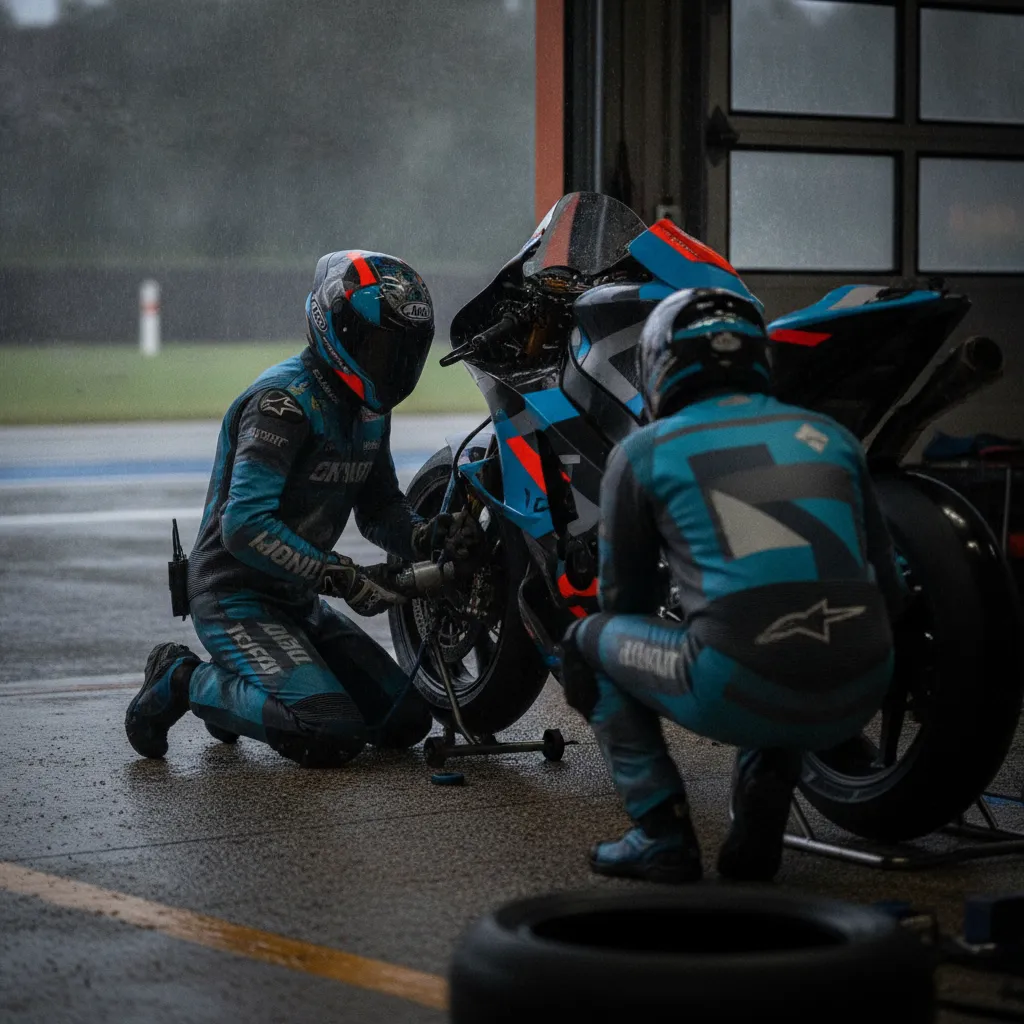
Then there’s the infamous British weather. Sunshine can turn to rain in an instant at Silverstone. If it rains mid-race, officials will declare a ‘Flag-to-flagA race where the weather changes and riders pit to switch bikes without the race stopping.Read the full guide →’ race. This allows riders to enter the Pit laneThe slow lane beside the track where teams work on the bikes and riders enter and exit.Read the full guide → and switch to their spare bike, which will be fitted with special Wet tyresGrooved tyres that channel water away so the bike can grip a wet track.Read the full guide → that have deep grooves to clear water. This can completely shuffle the order and lead to surprise results.
Finally, while it’s a fast track, there are several very heavy braking zones where riders have to slow down from incredible speeds in a very short distance. This tests the brakes, the stability of the bike, and the physical strength of the rider, who has to absorb huge forces lap after lap.
What does this race mean for the championship?
As a classic event on the calendar, winning at Silverstone carries a special prestige. It’s a track that every rider wants to conquer. In terms of the championship fight, every single point is crucial as the season progresses, and a strong result here can provide vital momentum.
The fast and flowing nature of the circuit can suit some bikes better than others. Teams with powerful engines and stable chassis (the bike’s main frame) often do well here. Watch to see which manufacturers, like Ducati, Aprilia, or KTM, seem to have an advantage through the fastest sections.
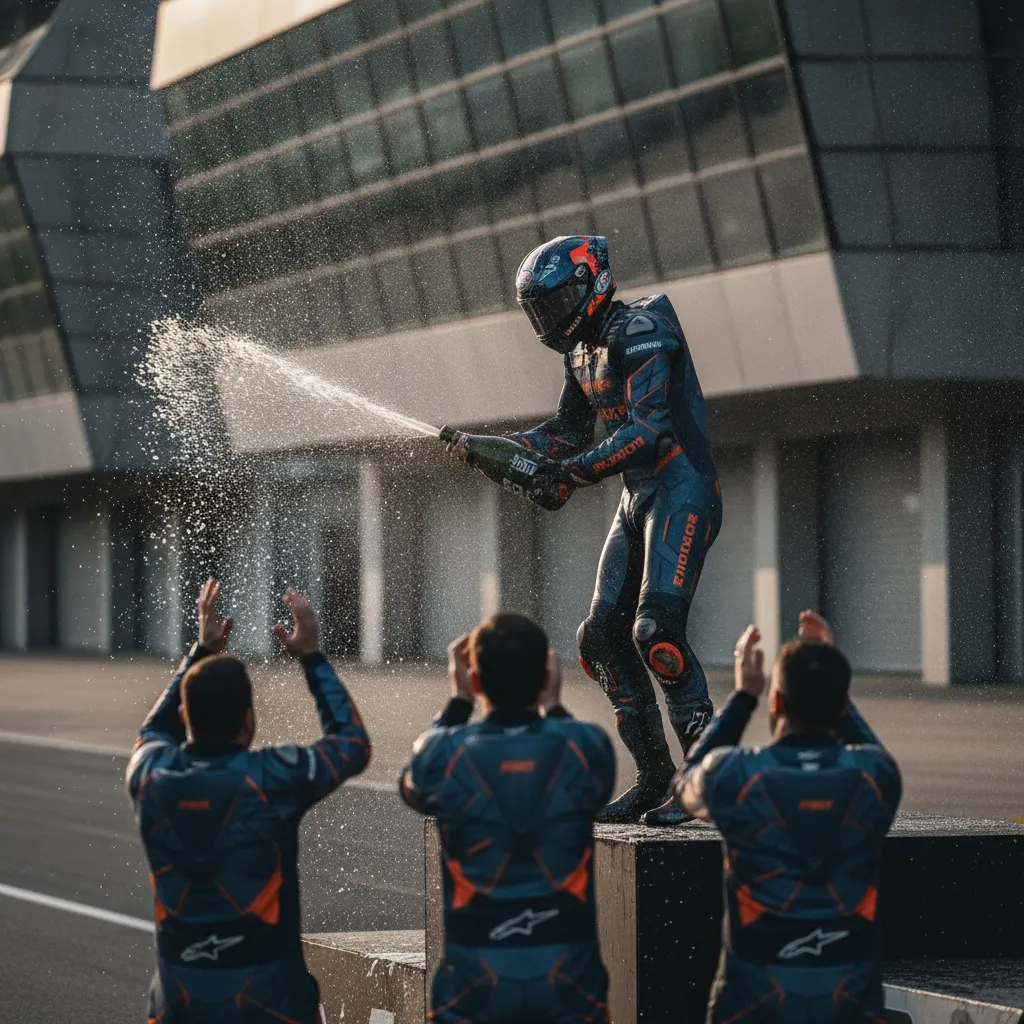
Above all, it’s a race that tests every aspect of a rider’s ability. It requires courage, intelligence to manage the race, and technical skill to navigate the challenging corners. The winner at Silverstone will have truly earned their place on the top step of the podium.
How can I watch?
The MotoGP weekend is split over three days. Friday is for PracticeSessions before qualifying where riders set up the bike; the combined times decide who goes straight to Q2.Read the full guide → sessions, Saturday features more practice, QualifyingThe timed sessions that set the starting order, split into Q1 and Q2 for the front rows.Read the full guide → (which decides the starting grid positions), and the exciting, half-distance Sprint raceA short Saturday race over half the distance, awarding points to the top nine finishers.Read the full guide →. The main event, the full-length Grand Prix, takes place on Sunday.
Check your local TV listings to find the official broadcaster in your country. In the UK, for example, races are typically shown on TNT Sports. Alternatively, MotoGP’s own VideoPass streaming service offers live coverage of every session from anywhere in the world.
Quick Takeaways
- Silverstone is one of the longest and fastest tracks on the MotoGP calendar, famous for its high-speed, flowing corners.
- The unpredictable British weather is a huge factor and can lead to dramatic ‘flag-to-flag’ races where riders switch bikes mid-race.
- Managing tyre wear is critical due to the high speeds and long corners putting huge stress on the rubber.
- Its history and challenging layout make the British Grand Prix a prestigious event that every rider wants to win.
Quick questions
- Q.How long is the Silverstone circuit for MotoGP?
- The Silverstone Grand Prix circuit is 5.9 km (approximately 3.67 miles) long, making it one of the longest tracks on the MotoGP calendar.
- Q.What is 'slipstreaming' in MotoGP?
- Slipstreaming is when a rider positions their bike directly behind another on a straight. This reduces air resistance, allowing them to gain speed and attempt an overtake before the next corner.
- Q.Why is British weather such a big deal for the race?
- The weather is notoriously unpredictable. A sudden downpour can force riders to pit and change to bikes with wet-weather tyres, completely changing race strategy and often leading to unexpected results.
- Q.What is the difference between the Sprint and the Grand Prix race?
- The Sprint is a shorter race held on Saturday, running for half the distance of the main event. It awards half points and sets an aggressive tone for the weekend, while the Grand Prix on Sunday is the full-length main event.